We operate as a professional service team and witness daily that hidden water leaks are among the most destructive problems properties face.
These invisible faults run undetected for weeks, silently causing damage behind walls and under floors. Our technicians regularly uncover minor drips that have cost local families thousands in unnecessary repairs.
Property managers and homeowners often get caught completely off guard by the resulting structural decay. We see that early detection remains the only reliable way to protect your property value across Sydney’s Eastern Suburbs.
Let’s look at the data, unpack what it actually tells us, and explore the 8 signs of a hidden water leak in your home you need to watch for.
1. Unexplained Increase in Your Water Bill
We often tell clients that a creeping water bill serves as the clearest red flag of a plumbing issue. Sydney Water data for 2025 and 2026 shows the average resident uses about 200 litres daily. Our tracking indicates that households in areas like Woollahra average a staggering 304,000 litres annually.
This inflated usage often stems from undetected faults. We want you to be aware that standard usage charges rose to $3.17 per kilolitre in October 2025. An average Sydney household now pays around $1,388 per year for water and wastewater services.
Our team recommends monitoring your meter routinely to catch these invisible costs before the quarterly invoice arrives. A continuous toilet leak wastes thousands of litres and severely impacts your budget.
How to Check Your Meter
We recommend performing this simple check early in the morning or late at night. Make sure no appliances are running during the testing window. Our process takes just a few steps to complete.
You need a bit of patience to do this right.
- Note your exact water meter reading down to the final dial.
- Ensure all taps, washing machines, and irrigation systems remain off.
- Wait exactly 2 hours without using any water on the property.
- Check the meter again to see if the numbers have moved.
Our experience shows that an active leak exists if the reading changes. A leak as small as one drop per second throws away approximately 12,000 litres per year.
2. Damp, Musty, or Mouldy Smells
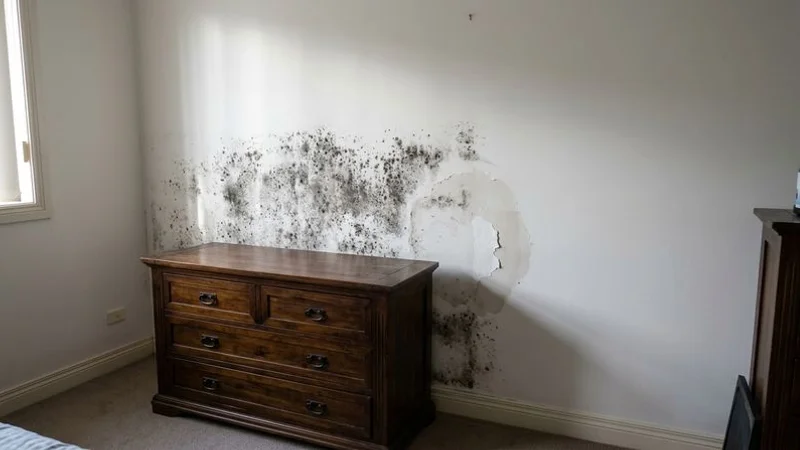
We frequently trace persistent, musty odours back to failed waterproofing in residential bathrooms. Australian Standard AS 3740 was updated to 2026 specifications specifically to combat widespread shower leaks. Our inspections reveal that Sydney’s humid summer climate accelerates this unseen mould growth rapidly.
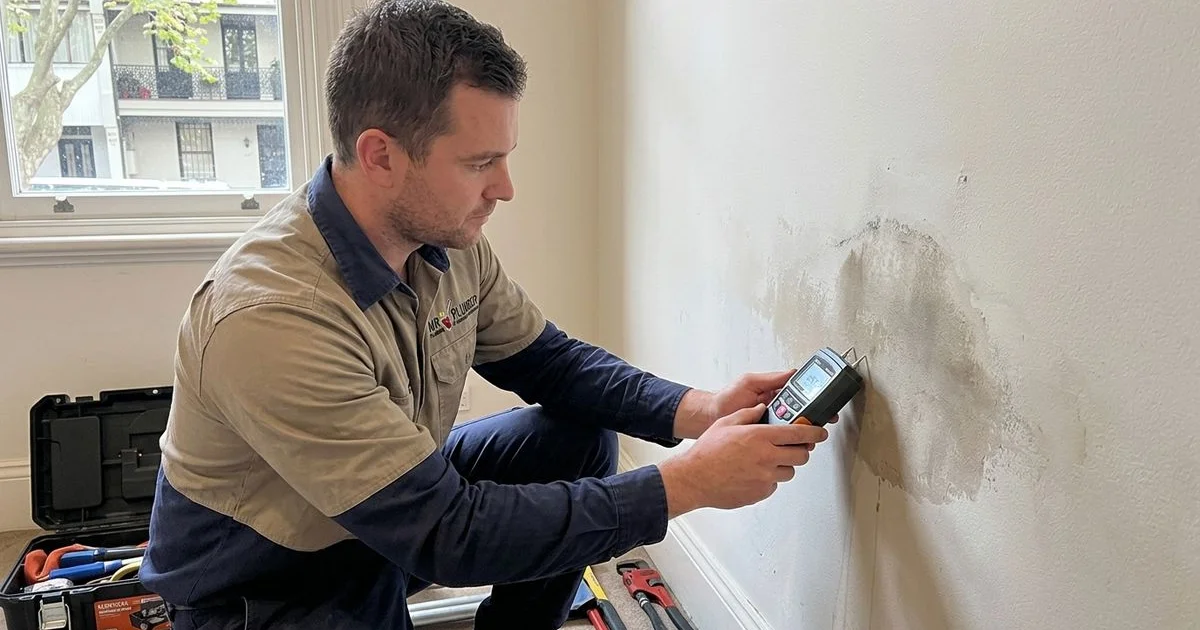
Fungal colonies can easily establish themselves within 48 hours of a wall cavity becoming damp. We use advanced tools like the FLIR MR60 pinless moisture meter to trace these smells to their source without tearing down your walls. The spores spread extensively before becoming visible on your paintwork.
Our technicians know that masking the odour with air fresheners only allows the structural decay to worsen. Industry research highlights that waterproofing defects affect a massive percentage of modern strata buildings across the country.
Common Problem Areas to Sniff Out
We advise paying close attention to the ventilation in specific rooms. Certain zones are far more vulnerable to trapped moisture than others. Our structural assessments pinpoint specific locations that often indicate plumbing failures.
Investigate these high-risk areas carefully:
- Bathrooms and ensuites showing signs of failed silicone seals.
- Kitchens near dishwasher connections or hidden sink traps.
- Laundries directly behind the washing machine hoses.
- Subfloor areas in homes lacking adequate cross-ventilation.
Our team suggests calling a professional if a musty smell in a specific room does not resolve with cleaning. Catching the scent early provides a major advantage in limiting repair costs.
3. Visible Mould or Mildew in Unusual Places
We rely on high-end thermal imaging cameras to investigate mould appearing outside typical wet areas. Some mildew in shower corners is perfectly normal and preventable with regular cleaning. Our technicians consider fungal growth in completely dry zones to be a massive red flag requiring immediate attention.
Moisture reaching the surface from behind typically originates from a ruptured pipe within the wall cavity. We frequently locate the root cause using these non-destructive methods long before breaking through the plaster. Professional mould remediation alone easily sets a family back $3,000 to $10,000.
Our specialists understand that addressing the visible mould without fixing the internal leak is a waste of money. The spores will simply return the moment the area gets damp again.
Red Flag Locations for Mould
We always check specific areas during a comprehensive property audit. Watch for these unusual spots during your regular cleaning routine. Our crews know that any discoloration here demands a professional assessment.
The presence of spores indicates severe underlying dampness in spots like:
- On walls completely away from wet areas, especially at skirting board level.
- On ceilings directly below upper-floor bathrooms, indicating a waterproofing failure above.
- Behind heavy furniture pushed tight against external walls.
- Inside dark cupboards or built-in wardrobes.
We must stress that a permanent solution requires treating the pipe failure first. Delaying the repair simply allows the fungal network to spread deeper into your timber frames.
4. Discoloured, Bubbling, or Peeling Paint
We see bubbling paint as a classic symptom of water penetrating plasterboard from the inside out. Repairing water-damaged plaster in Australia easily costs between $500 and $1,000 per room. Our plumbers frequently encounter older homes across Paddington and Woollahra experiencing this damage due to aging copper pipes running through solid walls.
Prolonged dampness completely destroys the bond between the paint film and the wall material. We often spot a white, powdery substance called efflorescence on brickwork during these inspections. This crystalline buildup proves that moisture is drawing mineral salts directly to the surface.
Our repair crews recommend shining a bright torch across your walls to highlight surface imperfections. Water causes very specific visual changes to painted finishes.
Warning Signs on Your Walls
Professional devices like the Klein Tools ET140 moisture meter help verify if the plasterboard behind the paint remains wet. Sound plaster should always feel rock solid and completely dry. Our diagnostics frequently uncover active leaks behind walls showing these specific visual clues.
Look out for the following paint reactions:
- Yellow or brown stains left behind by dirty water and minerals.
- Blistering surfaces where water lifts the paint film completely off the wall.
- Flaking sections indicating the primer has failed due to moisture.
- Soft or spongy plasterboard that feels distinctly damp when pressed.
We frequently find these exact symptoms on ceilings directly below active bathrooms. Pressing gently on a suspected stain will quickly confirm if the wall is structurally compromised.
5. Warped, Buckled, or Stained Flooring
We consider damaged flooring to be a primary indicator of a serious leak beneath the concrete slab. Water travelling under the house will always seek the path of least resistance to reach the surface. Our damage assessments prove that replacing ruined hardwood creates a massive financial burden for any local family.
Material costs for premium flooring continue to rise sharply across Australia. We track current pricing and know that replacing Spotted Gum hardwood easily costs $120 to $230 per square metre just for materials. Installation adds another $40 to $80 per square metre on top of that expense.
Our technicians understand that different flooring materials react uniquely to trapped moisture. Monitoring these specific reactions helps you spot the warning signs much faster.
Signs of Damage by Flooring Type
We compiled this guide based on hundreds of local repair jobs. Each material demands a different inspection approach. Our team recommends acting immediately if you notice these signs concentrated near bathrooms or kitchens.
| Flooring Type | What to Look For | Average Repair Complexity |
|---|---|---|
| Timber / Hardwood | Warping, cupping, buckling, and dark mineral staining | High: Often requires complete board replacement |
| Laminate | Swelling at joints, lifting edges, and surface bubbling | Medium: Damaged sections cannot be saved |
| Tiles | Loose individual tiles, cracked grout, or a hollow sound when tapped | High: Requires matching discontinued tile batches |
| Carpet | Unexplained damp patches, persistent musty odours, and mould at the edges | Medium: Requires professional extraction and underlay swap |
| Vinyl | Lifting adhesive edges, trapped air bubbles, and severe discolouration | Low to Medium: Sections can sometimes be re-glued |
Pay special attention to the transition zones between wet and dry rooms. We see that a hidden leak is highly likely the culprit behind any sudden degradation. Swift action prevents the moisture from spreading into adjoining dry rooms.
6. Sounds of Running Water When Nothing Is On
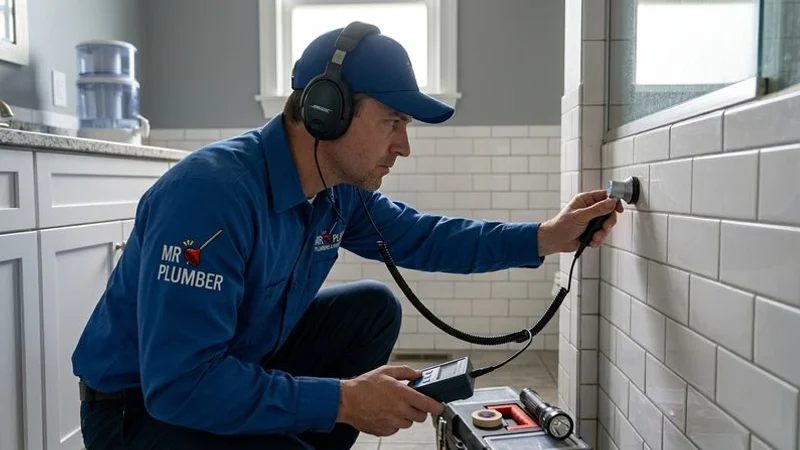
We rely on high-frequency acoustic listening discs to pinpoint faint dripping or hissing sounds behind walls. Standard residential water pressure in Sydney sits around 500 kPa. Our plumbers know that this immense pressure forces water out of tiny cracks with enough speed to create an audible hiss.
Hearing these noises when all appliances are off serves as a critical warning. We utilize professional acoustic leak detection equipment to hear frequencies deep underground. Leading brands like the Sewerin Aquaphon A200 allow professionals to detect water escaping from pipes up to 8 meters below the surface.
Our technicians know some faults are loud enough to hear clearly while walking down the hallway. Other issues require this highly specialized audio gear to isolate the exact location.
Where to Listen for Trouble
We suggest conducting a sound check late at night when the house is completely quiet. Background noise from traffic easily masks the sound of a slow drip. Our acoustic specialists focus their attention on the primary utility zones first.
Listen closely in these specific areas:
- Through the shared walls separating your bathroom and bedroom.
- Directly behind the kitchen cabinetry housing the dishwasher.
- Under the floor in slab-on-ground construction homes.
- Near the external hot water system and its connecting pipes.
We use professional leak detection equipment to find the source without unnecessarily tearing your house apart. Confirm the issue with a meter check if you hear running water with everything off. Our immediate intervention prevents the invisible flood from worsening.
7. Cracks in Walls or Foundation
We frequently connect sudden wall cracks to shifting soil caused by a broken underground pipe. Geotechnical reports classify many areas in the Eastern Suburbs as having Class H or Class E highly reactive clay soils. Our structural reviews show these specific soil types expand dramatically when saturated and shrink aggressively during dry spells.
This constant movement severely undermines your foundation and brickwork over time. We understand that while small hairline cracks in plaster are normal due to age, large sudden splits are not. A leaking pipe continuously feeding water into reactive clay creates localized ground heave.
Our industry data confirms that major structural movement from saturated soil often requires underpinning. In Sydney, standard residential underpinning jobs in 2025 and 2026 average between $12,000 and $30,000. We consider fixing the underlying plumbing fault essential before commencing any expensive foundation repairs.
Identifying Danger Signs in Brickwork
Property owners should walk the exterior perimeter of the building every few months. Certain fracture patterns clearly indicate major subterranean movement. Our engineers recommend documenting these changes with photographs to assess the timeline accurately.
Watch for these specific structural warnings:
- Horizontal cracks running along the skirting level, indicating rising damp.
- Vertical splits near plumbing fixtures where water is weakening the timber frame.
- Stair-step fractures tracing the mortar lines in exterior brickwork.
- Any large cracks accompanied by unexplained damp patches on the soil.
Our crews consider Slab leak detection and repair to be absolutely critical in suburbs like Randwick, Kensington, and Maroubra. Fixing the pipe stops the soil from expanding further against your footings. We warn that ignoring the root cause guarantees that cosmetic patch jobs will just crack open again.
8. Hot Spots on the Floor
We track hot water line leaks very carefully because they waste both vital water and expensive energy. Australian energy data for 2026 shows that water heating accounts for roughly 25 percent of a typical household’s power bill. Our calculations show a continuous leak from a heated pipe is literally burning money every single second.
Running a standard 250L electric hot water system already costs a family up to $1,500 per year. We see those annual costs easily double or triple when a hidden leak drains the heated tank directly into the soil. Thermal imaging cameras routinely uncover warm patches on tiled floors that indicate a ruptured line beneath the slab.
Our technicians know these hidden faults cause rapid deterioration of the concrete and the surrounding soil bed. They often go unnoticed much longer than cold water leaks because a slightly warm floor is not immediately alarming.
Why Heated Leaks Are So Destructive
We highly suggest walking barefoot across your hard floors periodically to feel for unusual temperature differences. Your feet will detect subtle changes that a casual visual inspection misses completely. Our financial models prove the impact of these specific faults compounds incredibly fast.
The costs escalate through several factors:
- You pay the water authority for the wasted volume flowing out of the pipe.
- You pay the energy company to heat water that simply drains into the earth.
- The elevated temperature accelerates the breakdown of surrounding building materials.
- Mould grows significantly faster in warm, damp subterranean cavities.
Our specialists know that isolating a hot water fault requires distinct diagnostic tools. Shutting off the primary heater valve temporarily can help confirm your suspicions. We advise checking your next gas or electric bill, as a noticeable drop following the shutdown confirms the diagnosis.
What to Do If You Spot the 8 Signs of a Hidden Water Leak in Your Home
We urge you to take immediate action if you notice any of the warning signs discussed above. Hidden plumbing failures never fix themselves, and the collateral damage only increases daily. Our diagnostic process makes resolving the issue simple, transparent, and non-destructive.
Delaying the investigation directly threatens the structural integrity of your property. We utilize advanced tracer gas technology to pinpoint exact fault lines beneath solid concrete. You can rely on these systematic steps to protect your investment.
Your Immediate Action Plan
We recommend starting with a straightforward photographic record of the damage. This visual evidence proves invaluable if you need to file an insurance claim later. Our insurance partners confirm that gradual moisture damage is notoriously difficult to get covered by standard policies without proof.
Follow this systematic approach:
- Perform the water meter test to confirm whether volume is being consumed when everything is off.
- Document the physical signs by photographing any staining, bubbling paint, or mould.
- Turn off the mains if the visible damage is spreading rapidly across the ceiling.
- Call Mr Plumber on 1800 247 474 to deploy our professional leak detection service to your address.
Our rapid response aims to save you from complete flooring replacement and severe structural failures. Early detection remains the most cost-effective solution available for your property.
Prevention Is the Best Strategy
We strongly advocate for proactive measures to protect your most valuable financial asset. Adding routine checks to your annual home maintenance checklist catches minor faults before they escalate into disasters. Our pre-purchase evaluations frequently reveal hidden pipe issues that standard building reports completely miss.
Many generic property inspectors simply do not examine the internal plumbing infrastructure in detail. We find that older properties in the Eastern Suburbs are particularly prone to failing pipes. Buyers must demand thorough assessments to avoid inheriting an expensive nightmare.
Essential Maintenance Tasks
We suggest integrating a few quick inspections into your seasonal routine. Regular professional checks provide immense peace of mind for busy local families. Our plumbers recommend the following preventative actions.
Keep your plumbing healthy with these steps:
- Inspect all visible pipes under sinks quarterly.
- Check the hot water system pressure valve twice a year.
- Monitor your water meter readings every month.
Our dedicated team is always ready to assist with comprehensive property audits. Staying ahead of the maintenance curve saves you thousands of dollars in the long run.
Get Expert Leak Detection
We are ready to assist immediately if you have spotted any of these 8 signs of a hidden water leak in your home across the Eastern Suburbs. Ignoring a damp smell or a warm tile will not make the underlying problem disappear.
Our technicians will find the source, show you the clear evidence, and provide a transparent repair plan.
Professional intervention stops the silent destruction dead in its tracks. Local residents rely on us to service a wide range of areas with specialized tools.
Our rapid response coverage includes:
- Bondi
- Woollahra
- Randwick
- Entire Eastern Suburbs region
You can easily book an appointment by calling Mr Plumber on 1800 247 474 today. Our comprehensive leak detection services ensure your property remains completely dry and structurally sound.
Make the call to protect your home.