We often see the exact same pattern play out when a burst pipe floods a hallway at two in the morning. A simple scheduled check prevents the vast majority of these costly emergency callouts. Recent data from Suncorp in 2025 shows that water damage now makes up around 24% of all home insurance claims in Australia.
Our general plumbing team has found that catching a fraying flexible hose early is usually the difference between a quick repair and a massive floor replacement. The average insurance claim for a burst flexi-hose has now climbed beyond $27,500. Small preventative steps clearly protect both your property and your wallet.
We will now look at the specific components that fail most often across residential plumbing systems. This clear breakdown covers the early warning signs and the exact steps for inspecting them. The Annual Plumbing Maintenance Checklist for Homeowners is designed to be highly practical.
Kitchen
Taps and Mixers
Our team recommends starting your kitchen inspection right at the sink. Modern WELS-rated kitchen mixers typically deliver a smooth flow of about 4 to 6 litres per minute. You will notice a drop in pressure if the aerator is clogged with calcium carbonate.
We always advise clients to check the ceramic disc cartridges inside these modern taps, as they last up to 10 years but can crack under high water pressure. A dripping tap can waste up to 20,000 litres of water annually, adding unnecessary costs to your utility bill.
- Check all taps for drips (both when on and when fully off)
- Test hot and cold water flow to ensure both deliver adequate pressure
- Look for corrosion, mineral buildup, or discolouration around tap bases
- Clean aerators (the mesh screen on the tap spout) by unscrewing them, soaking them in white vinegar for 20 minutes, and rinsing thoroughly
Under the Sink
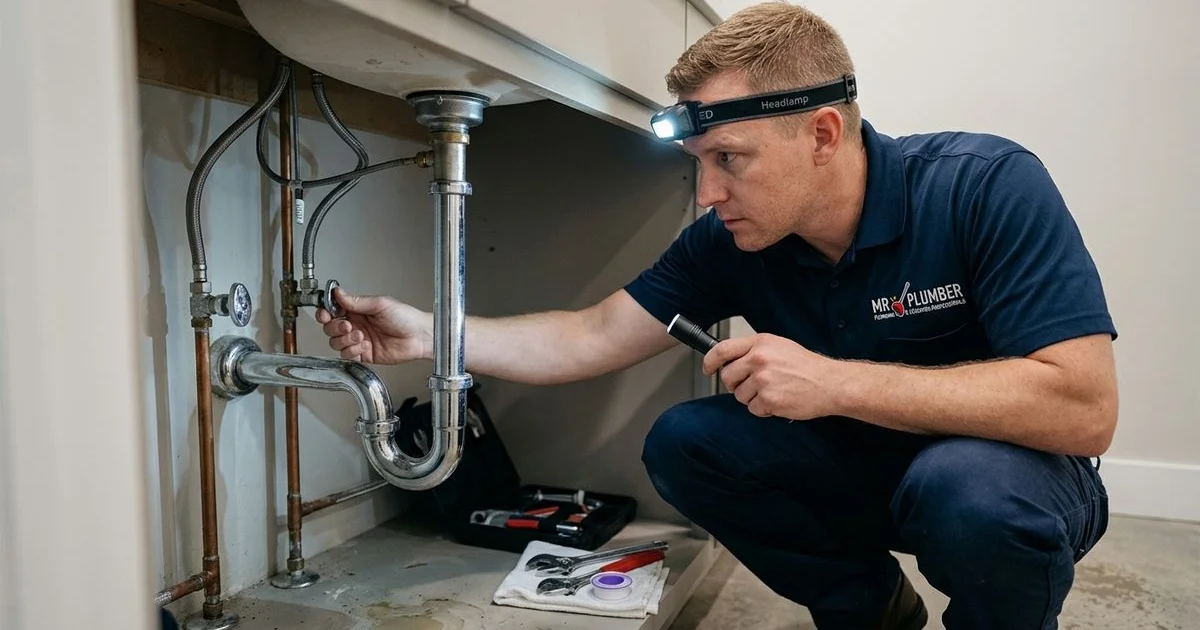
Many property managers consider the cabinet under the sink the most critical checkpoint in the house. This dark enclosed space hides minor drips that rapidly turn into structural cabinet rot.
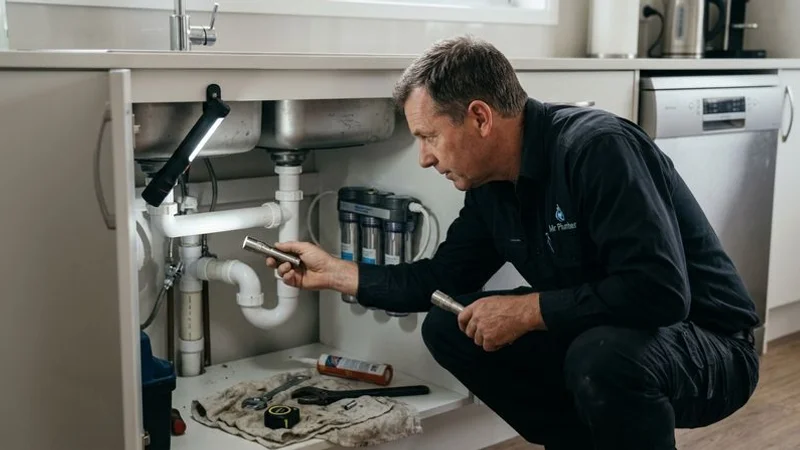
Our 2025 research aligns with national findings showing that 30% of standard EPDM rubber flexible hoses in Australian homes are currently at risk of bursting. These standard braided hoses are notorious for failing if they show any signs of rust or deterioration. Upgrading to modern polyamide braided hoses or those with a PEX inner core practically eliminates this risk.
- Inspect all visible pipes and connections for drips or dampness
- Check flexible braided hoses for bulging, rust staining, or corrosion at fittings (look for the WaterMark certification to ensure compliance)
- Look for signs of mould or water staining on the cabinet floor
- Ensure the trap (U-bend) is tight and not leaking
- Run the tap and watch the connections because leaks are easier to spot when water is flowing
Dishwasher
We suggest pulling the dishwasher out slightly to check underneath for leaks or damp patches. Premium appliances from brands like Bosch often feature an AquaStop system, which automatically shuts off the water supply if a leak is detected.
A neglected filter strains the drain pump and frequently leads to premature motor failure. Our technicians replace dozens of drain pumps every year simply because debris bypassed a damaged mesh filter. Regular cleaning prevents these expensive breakdowns.
- Pull the dishwasher out slightly and check underneath for leaks or dampness
- Inspect the supply and drain hoses for cracks, kinks, or deterioration
- Clean the dishwasher filter and check the drain for debris
Garbage Disposal (If Fitted)
Popular brands like InSinkErator work best when their internal impellers are kept free of fibrous waste. We highly recommend running cold water for 15 seconds after turning the unit off to flush the waste completely through the P-trap.
Fats and oils solidify rapidly in Sydney pipes when the temperature drops below 15 degrees Celsius. A monthly clean with ice cubes and citrus peels naturally degreases the grinding chamber.
- Run the disposal with cold water to check for unusual noises or vibrations
- Check for leaks at the sink connection and drain outlet
- Clean with ice cubes and citrus to remove buildup and odour
Bathroom and Ensuite
Taps, Shower, and Bath
Our inspections often reveal that quality bathroom sealants degrade over time due to constant moisture exposure. A failing line of silicone around the bath will eventually let water seep into the wall cavity and rot the timber frame.
Upgrading to a WELS 3-star rated showerhead can save a typical Australian household up to 14,500 litres of water per year. We check specific wet area formulas like Selleys for gaps because they contain highly effective anti-fungal properties.
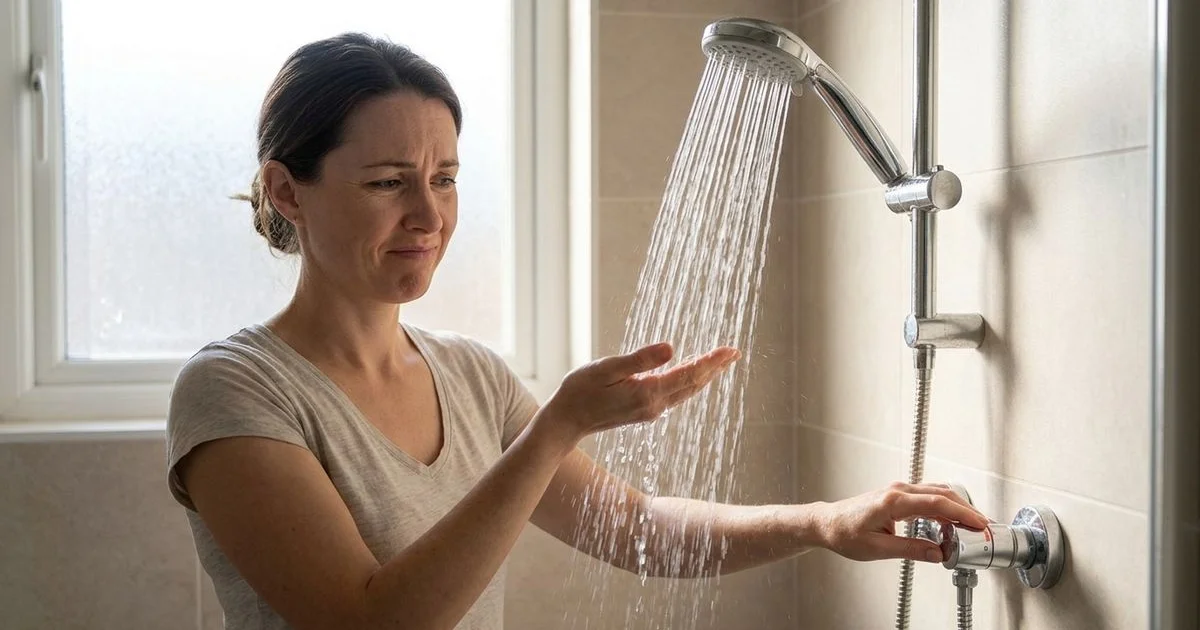
- Check all taps for drips, including the shower mixer
- Test water pressure and temperature response
- Inspect shower hoses for cracks or leaks
- Check the shower head for mineral buildup and soak in vinegar if the flow is reduced
- Look for cracks or deterioration in bath and shower sealant (we recommend checking specific wet area formulas like Selleys for gaps)
Toilet
Water Corporation WA notes that a continuously running toilet can waste up to 260 litres of water a day. This adds a massive hidden cost to your quarterly water bill.
Our plumbers frequently discover these silent leaks during routine inspections. The 2025 to 2026 Waterwise Toilet Rebate in Western Australia even offers up to 400 dollars to replace old 12-litre single-flush systems with efficient WELS 4-star models. You can easily test for silent running water with a few drops of dye.
- Check for continuous running by listening for water flowing into the bowl after the cistern has filled
- Perform the food colouring test by adding dye to the cistern and checking if it appears in the bowl without flushing after 15 minutes
- Check the base of the toilet for dampness or discolouration (this may indicate a failed wax pan seal)
- Ensure the toilet is firmly secured to the floor because rocking can break the seal
- Check the supply hose for bulging or corrosion
Under Basins
We apply the exact same rigorous checks here as we do in the kitchen. Vanity cabinets suffer severe water damage very quickly because they are often constructed from basic MDF board. A slow leak from a standard 15-millimetre braided hose will cause this material to swell and crumble within weeks.
- Perform the same inspection as the kitchen by checking pipes, hoses, and connections
- Look for mould or dampness in the vanity cabinet
Waterproofing
Faulty waterproofing is a leading cause of major structural defects in Australian strata buildings. Water sitting behind shower tiles will eventually compromise the structural integrity of the floor joists.
Our teams use digital moisture meters to detect hidden dampness behind the walls before the tiles start lifting. Visual inspections of the grout and shower screen seals remain your best first line of defense.
- Inspect grout and silicone in the shower recess for cracks, gaps, or mould
- Check the shower screen seal for deterioration
- Look for damp patches on walls adjacent to the shower (outside the bathroom)
- Check the ceiling below upper-floor bathrooms for water stains
Laundry
Washing Machine
Washing machine hoses sit under continuous pressure and represent a major flood risk. Standard EPDM rubber hoses degrade over time and should be replaced with high-quality stainless steel braided hoses to prevent sudden blowouts.
Our team recommends installing a dedicated flood-stop isolation valve for added security. A completely ruptured washing machine hose can discharge up to 1,500 litres of water per hour into your home. Replacing these standard hoses every five years is a very smart investment.
- Inspect hot and cold supply hoses (standard braided hoses should be replaced every 5 to 10 years)
- Check for bulging, rust, or moisture at hose connections
- Ensure the drain hose is secure and not kinked
- Run a cycle and check for leaks at all connections
Laundry Taps
We always check that laundry taps operate smoothly without requiring excessive force. Traditional rubber washers compress and harden over time, leading to persistent dripping. Upgrading to modern ceramic disc spindles provides a quarter-turn operation and lasts significantly longer.
- Turn taps on and off to check for drips and ease of operation
- Replace washers or spindles if taps are stiff or hard to turn
Floor Waste
Hydrogen sulphide sewer gas can enter your home if the P-trap seal dries out completely. This toxic gas smells like rotten eggs and presents a serious health hazard.
Our advice is to pour a litre of water down rarely used floor drains every three to four weeks. This simple action keeps the water seal intact and blocks the fumes.
- Pour one litre of water into the floor waste to ensure it drains freely and keeps the P-trap seal wet (this prevents hazardous hydrogen sulphide sewer gas from entering the home)
- Check that the drain cover is clear of lint and debris
Hot Water System
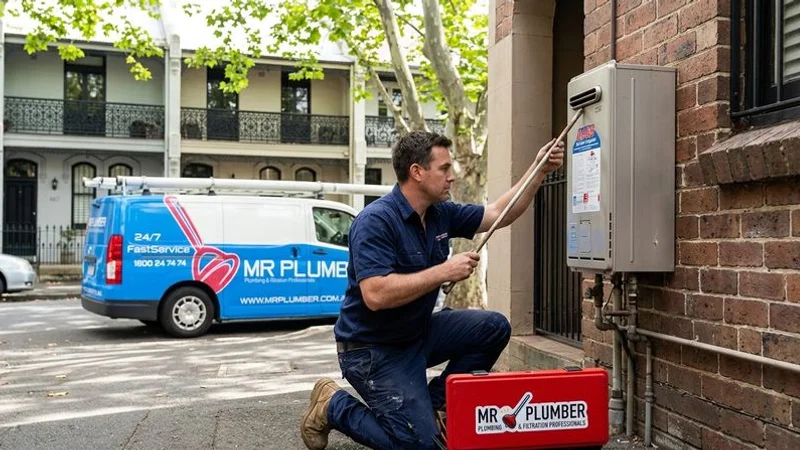
Australian plumbing standards strictly require storage hot water systems to be set at 60 degrees Celsius. This specific temperature prevents the growth of dangerous Legionella bacteria inside the storage tank. We always check the sacrificial magnesium anode during our routine services.
Replacing this 150-dollar component every three to five years protects the inner steel tank from rust. This minor maintenance task easily doubles the lifespan of a 1,500-dollar system.
- Perform a visual inspection for leaks around valves, fittings, and the base
- Test the TPR (temperature and pressure relief) valve by lifting the lever briefly (water should flow and stop completely when released)
- Check the anode condition (every 3 to 5 years, requires a licensed plumber)
- Flush the tank to remove sediment (see our hot water maintenance guide)
- Check the temperature setting (must be 60°C for storage systems)
- For gas systems: check the flue, burner, and pilot light (or electronic ignition)
- For heat pumps: ensure adequate airflow around the outdoor unit and clean the filter if fitted
Drains
Internal Drains
Slow drains typically indicate a developing blockage composed of hair, soap scum, and body oils. Pouring caustic supermarket chemicals down the sink often generates heat that warps PVC pipes.
Our plumbers strongly suggest using enzyme-based drain cleaners like Bio-Clean instead. These biological treatments safely consume the organic waste without damaging your internal plumbing structure.
- Run water through all drains and check flow speed (slow drains typically indicate a developing blockage)
- Pour water into rarely used floor wastes to maintain the trap seal
- Check for gurgling sounds when using fixtures, as this often indicates a venting issue or partial blockage
External Drains
The overflow relief gully, or ORG, is a crucial safety feature for your property. Australian standard AS/NZS 3500.2 requires the ORG to sit at least 150 millimetres below the lowest internal drain.
We inspect this yard drain to guarantee that any main sewer backup spills outside rather than flooding your bathrooms. Keeping the grate clear of landscaping mulch and leaves is essential for it to function correctly.
- Lift and inspect all accessible drain grate covers
- Remove leaves, debris, and silt from drain pits
- Check the overflow relief gully (ORG) in the yard to ensure it is clear and sits at least 150mm below the lowest internal drain
- Check stormwater grates and downpipe connections for blockages
Main Sewer Line
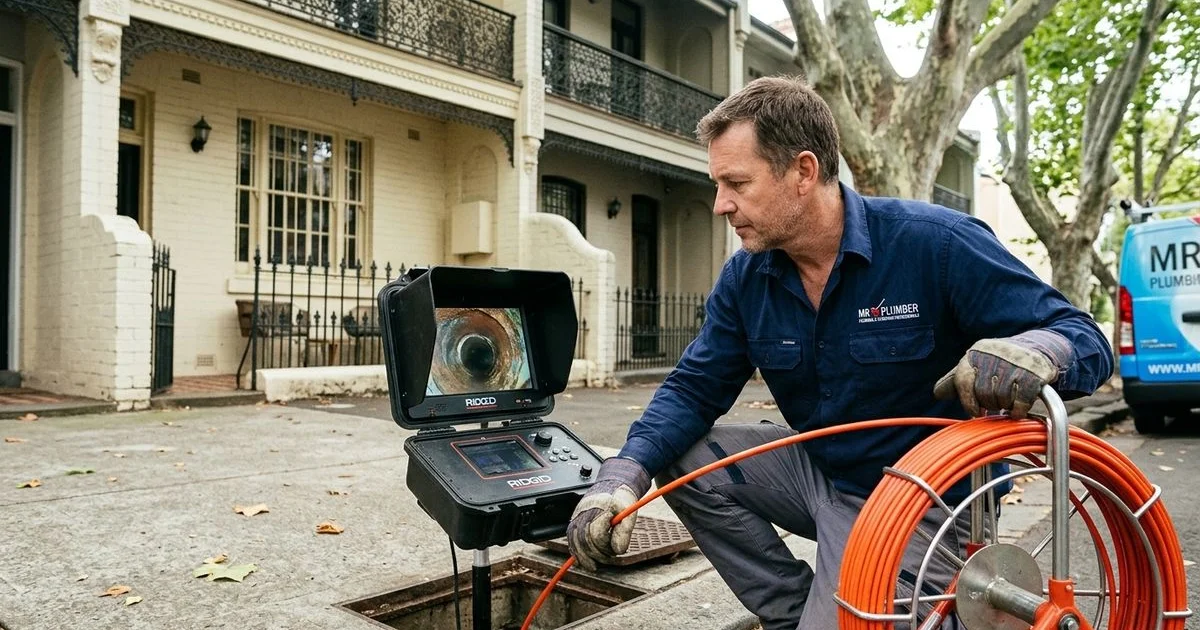
Older properties built before the 1980s frequently rely on earthenware clay pipes that are highly susceptible to tree root intrusion. Tree roots can travel up to three metres a year underground to seek out the moisture inside a cracked pipe.
Our inspection cameras often reveal massive root systems completely blocking these older clay lines. Watch closely for signs your pipes need attention, such as gurgling toilets or recurring bad odours. Upgrading to modern PVC or high-density polyethylene piping permanently resolves the root issue.
- Consider a CCTV inspection every 2 to 3 years if your property has ageing clay pipes
- Watch for signs your pipes need attention, including recurring blockages, bad odours, or slow drainage
Outdoor Plumbing
Taps and Irrigation
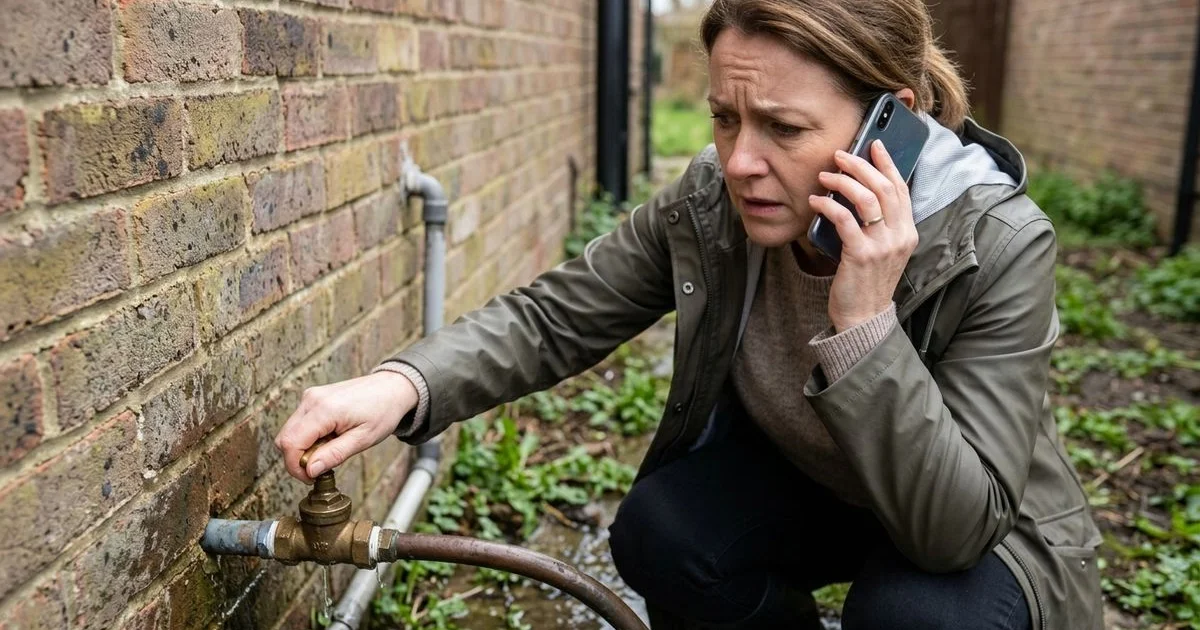
Outdoor garden taps endure extreme weather fluctuations that perish internal O-rings very quickly. Connecting a high-pressure irrigation system without proper safeguards creates a massive contamination risk.
We check for a functioning Reduced Pressure Zone Device on major irrigation setups. This backflow prevention valve stops stagnant ground water from siphoning back into your clean drinking supply.
- Check all outdoor taps for drips and ensure handles turn easily
- Inspect irrigation system connections and heads for leaks
- Check the timer and backflow prevention device (if fitted)
Gutters and Downpipes
A single millimetre of rain falling on a 100-square-metre roof generates 100 litres of runoff water. Blocked downpipes force this heavy volume of water back up under your roof eaves.
Our teams find that regular clearing in autumn and spring prevents devastating ceiling collapses. Ensuring the downpipes connect directly into the designated stormwater system keeps the foundations stable.
- Clean gutters of leaves and debris twice yearly (autumn and spring)
- Check downpipes are securely connected and flowing directly into the stormwater system
- Look for overflows or leaks during heavy rain
Water Meter
Your water meter is the best diagnostic tool for finding hidden leaks across the property, and our leak detection specialists can help when the signs are inconclusive. The small red dials on a standard Australian water meter measure individual litres of water passing through.
We always advise homeowners to check these components closely every six months. If those red dials are spinning when all fixtures are turned off, water is escaping somewhere underground or inside the walls.
- Read and record your meter reading to compare with your local water council bill
- Perform the meter test for leaks by ensuring all fixtures are off and checking if the meter dials still move after 15 minutes
General Property
Water Pressure
Australian standard AS/NZS 3500 explicitly caps residential water pressure at 500 kilopascals. High pressure acts like a wrecking ball on your system, accelerating wear on seals and instantly voiding warranties on new tapware.
Our technicians can easily install a pressure-limiting valve at the meter for around 250 dollars. This single component protects every connected appliance in the house from sudden pressure spikes.
- Consider having a pressure-limiting valve installed or checked if you notice inconsistent or unusually high pressure
- Remember that sustained pressure above 500kPa dramatically increases the risk of a burst pipe
Shutoff Valves
A seized shutoff valve during an emergency turns a manageable leak into a catastrophic flood. Traditional gate valves often corrode and jam solid after several years of inactivity.
We recommend upgrading older mains valves to modern quarter-turn brass ball valves. These newer valves are highly reliable and can be shut off instantly with very little physical effort.
- Locate and test the main water shutoff valve by turning it off and on to ensure it operates smoothly
- Locate isolation valves for individual fixtures and test these annually so they work when you need them
Flexible Hoses
Insurance data consistently ranks flexible hose failure as the number one cause of internal water damage claims in Australia. These hoses supply water to your toilets, sinks, and washing machines.
Our findings show that replacing any braided hose older than 10 years is non-negotiable for property safety. Look closely for any visible rust spots, fraying wires, or bulging sections along the metal casing.
- Check all flexible braided hoses throughout the home (under sinks, behind toilets, behind washing machines, and dishwashers)
- Replace any hose that is more than 10 years old, shows rust staining at fittings, or has any visible bulging
When to Call a Professional
While many visual checks on this checklist are completely DIY-friendly, certain tasks legally require a licensed professional. Any work directly modifying the water or gas supply requires certified expertise under Australian law.
Our technicians perform these higher-risk compliance checks and complex repairs every single day. You can safely handle the surface-level inspections using the guidelines above.
| Task Category | Specific Examples | Who Should Complete It |
|---|---|---|
| Visual Maintenance | Cleaning aerators, checking for drips, testing valves | Homeowner |
| System Servicing | Hot water anode replacement, pressure testing | Licensed Plumber |
| Gas Systems | Flue inspections, burner maintenance | Licensed Gas Fitter |
| Diagnostics | CCTV drain camera inspections, pipe locating | Professional Service Team |
Printable Annual Plumbing Maintenance Checklist for Homeowners
Saving this page or bookmarking it makes your annual check much easier to manage. A great habit is scheduling this inspection at the start of summer or winter to prepare your home for extreme weather. We recommend picking a consistent month each year to work through the list thoroughly.
Book Your Annual Plumbing Inspection
Do not wait for a midnight flood to take action on your property maintenance. For a thorough professional inspection, call Mr Plumber on 1800 247 474.
We will check everything on this list and more to give you complete peace of mind. Catching a developing issue early keeps your plumbing in pristine condition. Preventative maintenance is always cheaper than an emergency repair.
Our team services all of Sydney’s Eastern Suburbs, including Bondi, Randwick, Coogee, Woollahra, and Paddington. Call the office today to schedule your complete Annual Plumbing Maintenance Checklist for Homeowners.