We operate as a professional service team, meaning we see homeowners misjudge the severity of different water leaks every single day. The choice between a sudden rupture and a gradual drip dictates your financial risk and immediate response. Managing property maintenance usually comes down to answering one critical question, burst pipe vs slow leak, when should you call a plumber?
Our crews regularly watch small issues escalate because people misunderstand the true cost of delaying repairs.
A sudden rupture floods a room in minutes, while a slow drip quietly wastes up to 20,000 litres of water over a single year. Let’s break down the warning signs of each issue, the hidden costs involved, and exactly when you need to bring in a professional.
What Is a Burst Pipe?
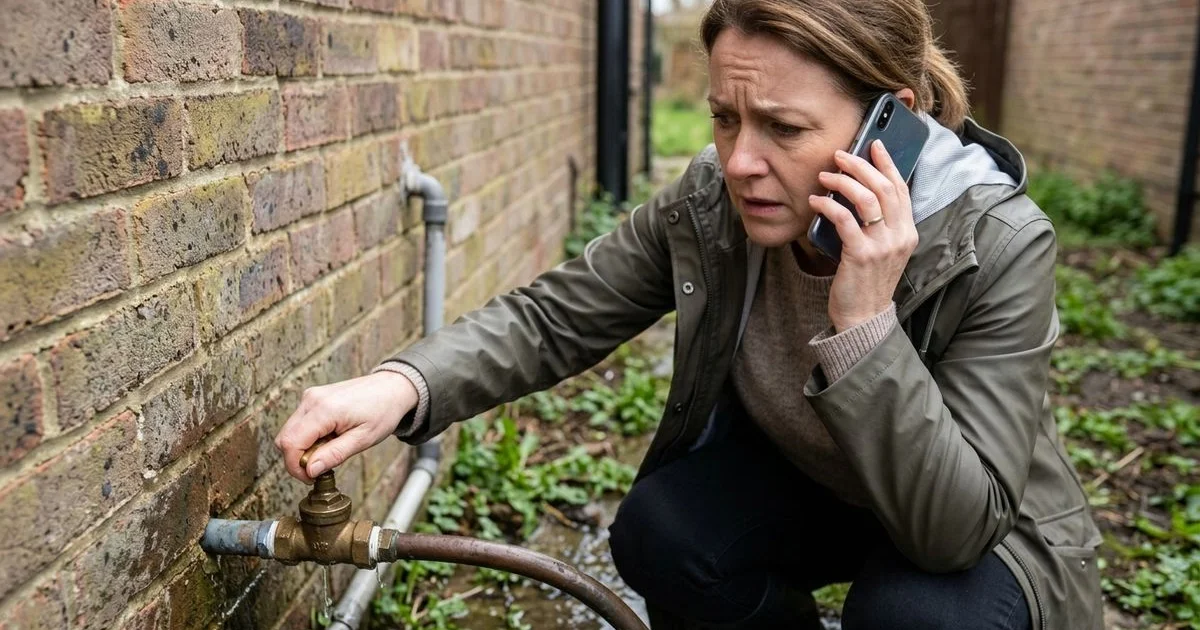
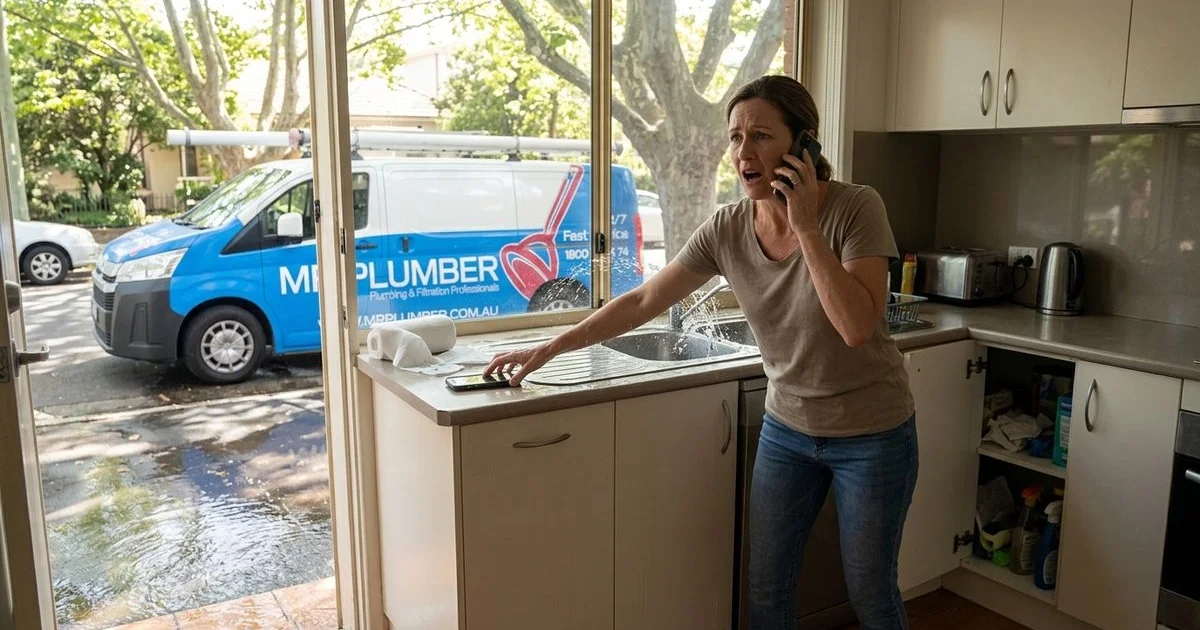
We classify a burst pipe as a sudden, catastrophic failure where a line cracks, splits, or completely breaks open. This represents a tier-one emergency. Water escapes rapidly and in large volumes, flooding the surrounding area within minutes.
Our data shows this adds up to more than 2.6 million litres of wasted water in a year if left flowing. A 2025 report from LeakTech notes that a typical fast leak or ruptured pipe releases a minimum of 5 litres per minute. According to a 2026 industry review by Graham and Sons Plumbing, burst pipe incidents alone contributed to $864 million in Australian insurance claims in a single year.
We know that this kind of volume destroys plasterboard, ruins flooring, and wrecks electrical systems. Chubb Insurance also confirms that internal water damage is now costlier than fire and burglary claims for Australian homeowners. Taking immediate action prevents these catastrophic financial losses.
Common Causes of Burst Pipes
We frequently encounter a variety of triggers across Sydney properties. Understanding the root cause helps you prevent future disasters. The most common culprits involve pressure spikes and ageing components.
- High water pressure: Sydney Water’s minimum standard is 15 metres head, but some zones receive over 100 metres head, creating over 1,000 kPa of pressure that easily ruptures older fittings.
- Failed flexible hoses: These braided steel hoses sit under sinks and are a notorious cause of floods. Recent 2026 data shows a single failed flexi hose results in an average insurance claim of over $27,500.
- Corrosion: Copper and galvanised steel pipes in older homes across Paddington, Darlinghurst, and Surry Hills corrode from the inside over the decades.
- Tree root damage: Roots from fig trees and other large species common in the Eastern Suburbs crush underground lines searching for moisture.
- Ground movement: Extended hot, dry weather causes reactive clay soils in Randwick and Kensington to contract. This shifting ground severely stresses buried pipes.
- Physical damage: Accidental impact during renovations or landscaping easily punctures pressurised lines.
Signs of a Burst Pipe
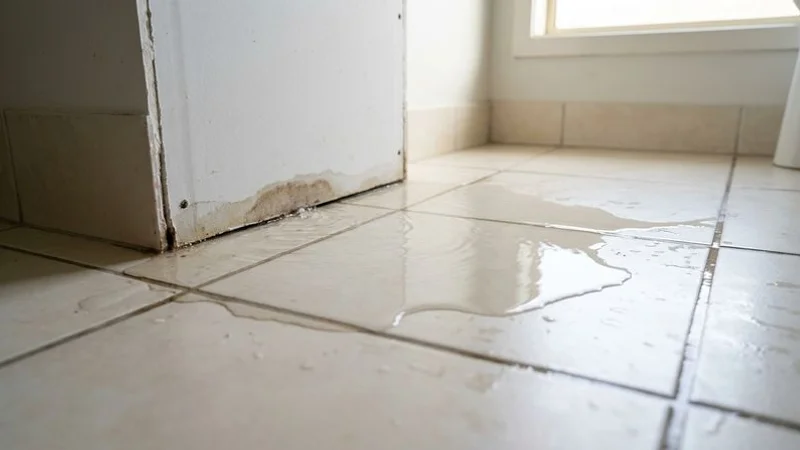
We urge clients to look out for undeniable red flags because recognising a major rupture is usually straightforward. Immediate chaos makes the problem obvious very quickly. Watch for these clear warning signs.
- Sudden loss of water pressure or no water flowing at all.
- Visible water spraying, gushing, or rapid flooding in a localised area.
- Loud rushing or hissing sounds echoing within walls or under floorboards.
- Sudden wet patches expanding on walls, ceilings, or floors.
- Your water meter spinning rapidly when all taps are securely shut off.
- Muddy or eroded sinkholes appearing in your garden above buried lines.
Our local crews confirm that concealed leaks behind walls or ceilings quickly push repair prices between $650 and $1,200. Recent 2026 pricing data from EKORP Plumbing shows that minor accessible repairs cost between $150 and $500. A 2026 guide from Mates Rates Plumbing adds that emergency call-out fees in Sydney often range from $150 to $250 before work even begins.
We consider a burst pipe an absolute emergency every single time. Call Mr Plumber on 1800 247 474 immediately and follow our emergency plumbing checklist. Waiting will only multiply your repair costs.
What Is a Slow Leak?
We often see slow, hidden water escapes go unnoticed for weeks or even months. A slow leak is a gradual drip from a pipe, fitting, or fixture. Water may seep or weep at an incredibly low rate, hiding the true extent of the issue.
Our team knows that this translates to over 14,000 litres a year charged directly to your utility bill. A 2021 study by Whywait Plumbing highlighted that a single dripping tap wastes 40 litres of water a day. SilverWater Plumbing also reports that a tap leaking just one drop per second wastes nearly 2,000 litres every three months.
We find that small drips create massive financial burdens over time. Sydney Water actually uses advanced acoustic sensors in their Active Leak Detection program specifically because many background leaks never reach the surface. These hidden faults erode building materials long before you see a damp patch.
Common Causes of Slow Leaks
We regularly diagnose a variety of silent culprits during routine inspections. Many components degrade slowly behind the scenes. Pay attention to these common failure points.
- Worn washers and seals inside ageing taps and isolation valves.
- Excessive pressure exceeding the 500 kPa maximum limit set by Australian Standards, which ruins residential tapware prematurely.
- Corroded pipe joints that weaken over time, especially in older cast iron or ductile iron systems.
- Loose fittings created by daily vibration or thermal expansion.
- Hairline cracks in pipes caused by age, minor ground stress, or shifting foundations.
- Failed waterproofing around shower bases, bathtubs, and vanity units.
- Degrading flexible hoses located under sinks and behind washing machines.
Signs of a Slow Leak
We recommend checking for subtle indicators every few months. Catching a gradual drip early requires vigilance. Look for these specific changes around your property.
- Unexplained increases in your quarterly water bill.
- Damp or musty smells lingering in a room, cupboard, or wall cavity.
- Mould or mildew appearing on walls, ceilings, or shower grout.
- Discolouration, bubbling paint, or peeling wallpaper on drywall.
- Warped or lifting timber floorboards and loose bathroom tiles.
- The faint sound of dripping when every appliance is turned off.
Our technicians always advise that early detection stops major structural rot. Health authorities also warn that chronic dampness from untreated leaks creates the perfect environment for harmful mould spores. Addressing the moisture fast keeps your indoor air quality safe.
Burst Pipe vs Slow Leak, Which Is More Dangerous?
We hear clients express far more fear over sudden ruptures than tiny drips. This exact question is where many property owners make a costly miscalculation. While a ruptured line demands immediate attention, gradual leaks often cause significantly more total destruction because they remain hidden.
Our crews have seen minor slab leaks in Maroubra run for three months straight. A sudden break in a Bondi apartment floods the kitchen, but the damage is localised and addressed within hours. Prolonged moisture exposure leads to severe secondary consequences.
| Risk Factor | Burst Pipe | Slow Leak |
|---|---|---|
| Detection Speed | Minutes to hours | Weeks to months |
| Primary Danger | Instant flooding and ruined belongings | Hidden rot, mould, and structural decay |
| Pest Attraction | Minimal | High (Termites thrive on constant moisture) |
| Average Repair Cost | High upfront emergency fee | Massive cumulative repair and utility bills |
We constantly warn homeowners that subterranean termites are highly moisture-dependent. A 2026 report from Domain confirms that termites cause $1.5 billion in damages across Australia annually. Data from Owner Inspections in 2026 highlights that the destructive Coptotermes acinaciformis termite can cause significant structural damage in just three to six months when drawn to damp timber.
Our experience aligns with the unfortunate reality that most standard home insurance policies do not cover preventable termite damage. A 2025 guide from Reztor Restoration notes that severe water damage involving structural repairs and mould removal easily exceeds $10,000. Ignoring a minor drip leaves you entirely unprotected against these massive repair bills.
Burst Pipe vs Slow Leak, When Should You Call a Plumber?
We use a simple triage system to help clients decide when to pick up the phone. Assessing the situation calmly saves you from paying after-hours surcharges unnecessarily. Understanding the pricing difference makes the decision easier.
Our industry pricing review shows that standard plumbing rates in Sydney sit between $100 and $150 per hour. Recent 2026 data from Jet Plumbing confirms that emergency off-hours rates jump significantly to between $150 and $250 per hour. Follow this priority guide to match the right service to your problem.
Call immediately (emergency) if:
We dispatch technicians immediately for high-risk scenarios. Waiting is not an option when safety or property integrity is on the line. Pick up the phone right away if you notice any of these extreme hazards.
- Water is actively flowing, and you cannot stop it at the mains.
- Sewage is backing up into your sinks, showers, or yard.
- You smell gas near your hot water system or plumbing fixtures.
- Water is pooling near electrical wiring, switchboards, or outlets, creating an electrocution risk.
- A ceiling is visibly bulging from heavy water accumulation.
- Your hot water unit is failing dangerously or leaking heavily.
Book a standard appointment if:
We suggest scheduling a standard daytime visit for minor annoyances. Some problems require professional attention but do not warrant emergency fees. Booking between 7 AM and 5 PM keeps your labour costs down.
- A single tap is dripping consistently.
- You notice a slight increase in your water bill, but there is no visible water.
- Grout is slowly deteriorating or lifting in the shower.
- A pipe shows early signs of exterior corrosion but is not actively weeping yet.
Act within 24-48 hours if:
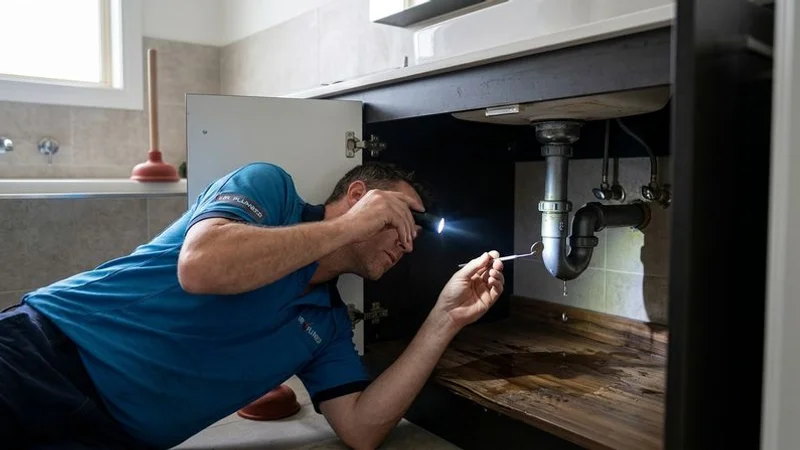
We treat specific warning signs with high priority during regular business hours. Certain symptoms hint at a growing problem that will worsen rapidly. Do not let these intermediate issues drag on for weeks.
- You find new, unexplained damp patches on a wall or ceiling.
- Mould is rapidly appearing in a previously dry area.
- You hear water running faintly but cannot locate the exact source.
- Your water meter shows active usage when all appliances are turned off.
Our industry data shows that structural damage compounds daily. The Environmental Protection Agency confirms that mould spores begin growing on damp indoor surfaces within just 24 to 48 hours. Booking a prompt inspection stops a minor annoyance from becoming a major health hazard and insurance claim.
How Mr Plumber Can Help
We possess the specialised tools and local expertise to resolve the issue permanently. Whether you face a sudden flood in a Woollahra terrace or a hidden drip under your Coogee bathroom, fast action is essential. Fast emergency plumbing response minimises the total destruction of your property.
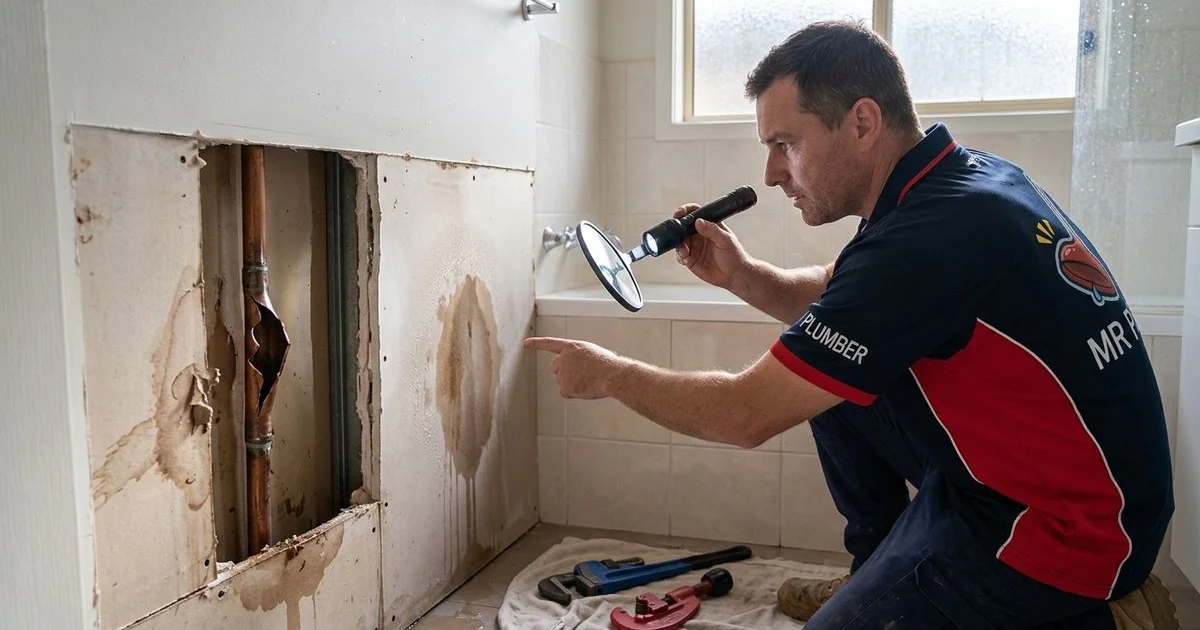
Our technicians isolate the main supply and secure the area before executing any major repairs. When dealing with hidden drips, the leak detection service uses advanced technology to find the fault without tearing down your drywall:
- High-frequency acoustic devices that pinpoint the exact sound of pressurised water escaping through a concrete slab.
- Thermal imaging cameras that track temperature differences behind tiles to reveal the exact moisture path.
Our blocked drain and pipe relining services completely restore your underground lines without destroying your landscaping. Modern trenchless technology saves your garden and your driveway. You get a permanent fix with minimal disruption to your daily routine.
The Bottom Line
We advise keeping a trusted professional’s number saved in your phone for quick access. Knowing exactly how to react to plumbing failures protects your property value. So, for a burst pipe vs slow leak, when should you call a plumber?
- Burst pipe: Call immediately because every minute counts.
- Slow leak: Do not panic, but do not ignore it. Book a plumber within 24 to 48 hours.
- Not sure?: Call Mr Plumber on 1800 247 474 and describe the situation.
Our dispatch team will advise you honestly on whether the situation needs an emergency response or can wait for a standard appointment.
Your plumbing system acts as the circulatory network of your home. Treat every leak with the urgency and attention it deserves to secure your property today.