We regularly see the panic that sets in when a homeowner or strata manager receives an inexplicably high quarterly water bill. The immediate question always becomes: Can You Find a Leak Yourself, or Should You Hire a Pro?
Sydney Water usage rates jumped to $3.17 per kilolitre in late 2025, making hidden faults much more expensive to ignore.
Our professional service team has spent decades tracking down these frustrating issues across New South Wales. Early intervention consistently stops minor drips from turning into massive structural repair bills.
Let’s look at the practical DIY tests you can perform right now. You will then see exactly when advanced diagnostic equipment becomes absolutely necessary.
What You CAN Check Yourself
1. The Water Meter Test
The simplest and most effective diagnostic tool you have is sitting right at your property boundary. Most standard Sydney residential setups use Elster or RMC water meters, which feature a specific dial to track usage down to the litre.
We recommend running a basic isolation test to confirm if moisture is escaping from your main supply line. This simple process provides immediate clarity.
- Turn off every single tap, appliance, and fixture in your home, including dishwashers and automatic irrigation systems.
- Note the exact placement of the black and red numbers on your meter dial.
- Wait for two full hours without turning on any water sources.
- Check the meter reading a second time.
Our field technicians often find that the small red triangle or rotating cog on the meter is the dead giveaway. A spinning indicator on a fully shut-down house confirms an active fault.
This result proves water is escaping somewhere on the property. You will still need to investigate further to pinpoint the exact location.
2. Toilet Leak Test
Toilets remain one of the most common sources of hidden water waste in residential properties. A continuous running cistern can silently flush away 50,000 litres over a single year.
We calculated that this specific volume wastes roughly $158 annually at current 2026 usage rates. A simple food dye check helps verify the integrity of your flush valve, particularly in popular Australian brands like Caroma or Fowler.
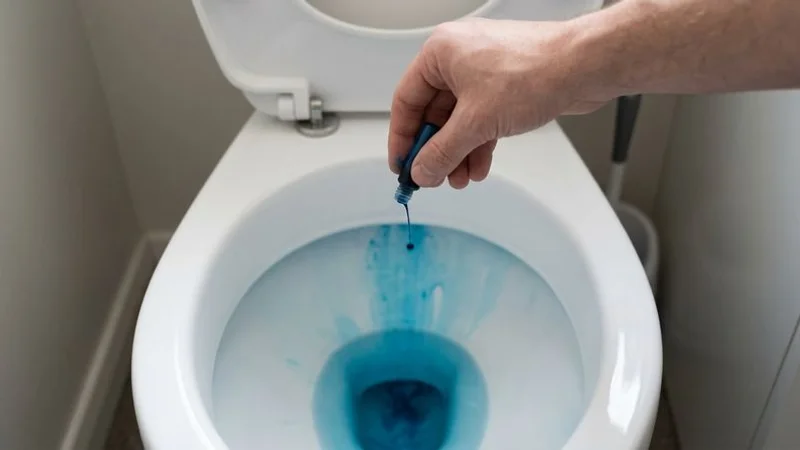
- Remove the heavy ceramic lid from your toilet cistern carefully.
- Add half a dozen drops of dark food colouring directly into the sitting water.
- Wait roughly 20 minutes and make sure nobody flushes the system.
- Inspect the toilet bowl to see if any tinted water has seeped down.
Our repair crews frequently fix this exact problem by simply replacing a degraded rubber seating washer. This $20 hardware store part solves the issue immediately.
An experienced plumber can swap this component out in minutes during a routine maintenance callout. Trying to force a stiff, calcified valve yourself can sometimes crack the ceramic tank.
3. Visual Inspection of Exposed Plumbing
Walk through your property and systematically check all accessible plumbing connections. Industry data from the NRMA in 2025 shows that burst pipes and flexible hoses are responsible for a massive 71% of internal water damage claims.
We strongly advise inspecting the stainless steel supply lines under your kitchen and bathroom sinks. Catching a frayed PEX or Abey braided hose early prevents a total rupture.
- Underneath sinks: Check for active drips, expanding cabinet timber, or dark moisture stains on the baseboard.
- Behind the toilet: Inspect the braided supply line and the main stopcock valve for rust.
- Washing machine taps: Verify that both the hot and cold heavy-duty hoses are completely dry at the threaded connections.
- Dishwasher cavities: Slide the appliance out a few centimetres and use a torch to check the floor underneath.
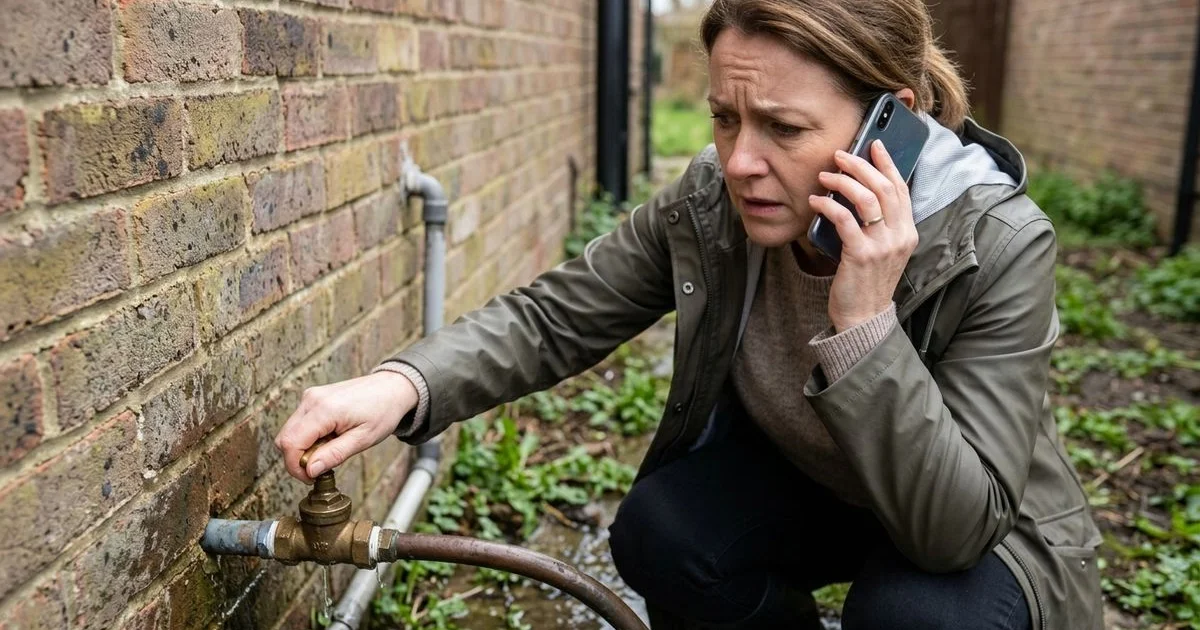
- Outdoor garden taps: Look for a constant drip or an unusually muddy patch right at the base of the brickwork.
Our maintenance teams recommend replacing all standard braided flexible hoses every five years as a strict preventative measure. This minor scheduled upgrade protects your home from catastrophic flooding while you are away at work.
4. Garden and Yard Inspection
Your external property lines often hide significant underground faults. Sydney features highly reactive clay soils that trap moisture, making subterranean issues slightly easier to spot on the surface.
We suggest taking a slow walk around your fence line and garden beds. Keep a close eye out for these specific environmental clues.
- Unusually lush patches of grass, as leaking sewer lines act as a potent fertiliser.
- Soft, spongy sections of the lawn that remain boggy even during a dry summer week.
- Water pooling unnaturally on flat surfaces or against retaining walls.
- Sudden sinkholes or minor depressions forming in your front yard.
- Persistent dark wet patches on concrete driveways or paved footpaths.
Our excavation specialists frequently trace these exact symptoms back to cracked early-generation blue poly pipes or displaced terracotta stormwater drains. Identifying these surface signs early helps minimise the amount of heavy digging required later.
Ground saturation over several weeks will eventually shift your concrete footings. Spotting the problem before the foundation moves is critical for structural safety.
5. Hot Water System Check
Your storage water heater is another prime suspect for silent water loss. Popular domestic units from Rheem, Dux, or Vulcan all feature a Temperature Pressure Relief (TPR) valve designed to vent small amounts of steam.
We regularly see these crucial copper valves fail and release a continuous stream of hot water straight into the drain. Inspect the installation site for these common warning signs.
- Significant water pooling at the concrete base of the tank.
- Thick rust trails running down the side of the cylinder or across the ground beneath it.
- A steady, continuous stream of water venting from the relief valve pipe.
- General dampness around the main cold water inlet and hot water outlet connections.
Our hot water specialists note that replacing a faulty TPR valve is a quick, inexpensive fix. Ignoring this continuous leak will eventually rust out the entire steel cylinder.
A completely rusted tank requires a full unit replacement, which easily exceeds $1,500 in 2026. Catching the $150 valve issue early is just smart property management.
What You CANNOT Reliably Find Yourself
Certain faults are simply impossible to locate accurately without commercial-grade diagnostic gear. The Insurance Council of Australia reported in 2024 that the average water damage restoration claim hit $7,500, highlighting the severe financial risk of guessing wrong.
We invest heavily in non-destructive testing equipment to pinpoint issues without tearing your property apart. Here is a breakdown of the specific situations requiring advanced plumbing technology.
Leaks Inside Walls
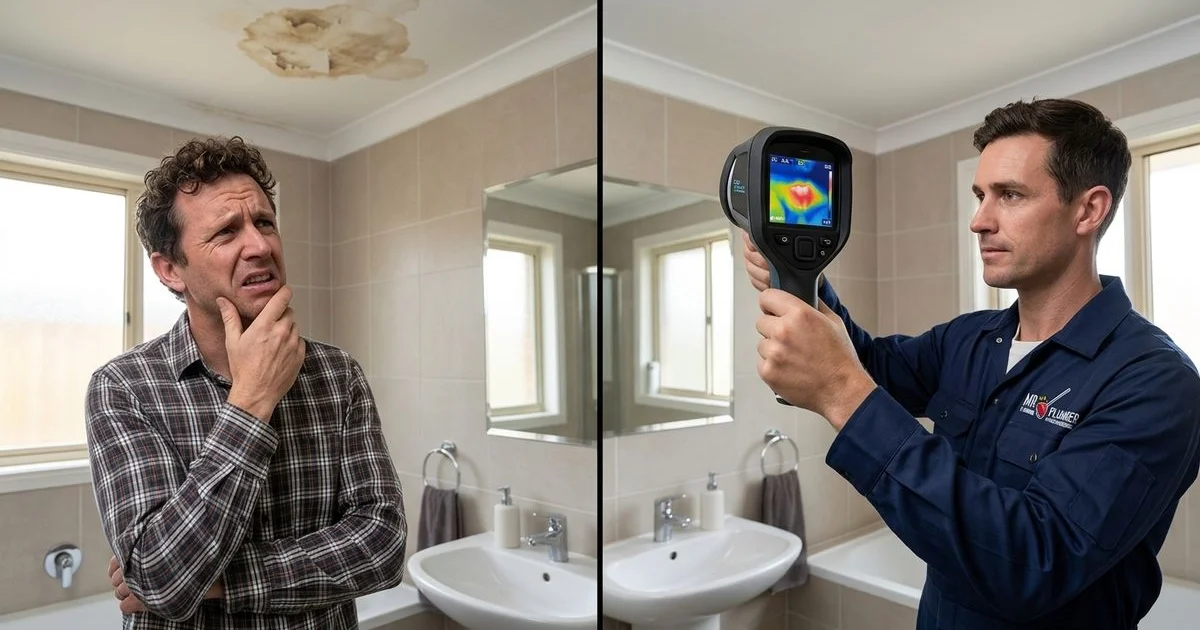
Pipes routed through internal wall cavities remain completely invisible to the naked eye. You might only spot secondary damage like bubbling paint, expanding skirting boards, or black mould growth.
Our leak detection specialists use high-end technology to find the exact pinhole fracture behind the plasterboard. Technicians rely on several advanced diagnostic tools.
- Acoustic listening devices: Systems like the Sewerin Aquaphon A200 amplify the distinct hissing sound of escaping pressure.
- Thermal imaging cameras: FLIR E8 Pro handheld scanners detect minute temperature drops caused by hidden moisture pooling behind gyprock.
- Non-invasive moisture meters: Digital sensors map the spread of dampness inside structural timber without scratching the paintwork.
- Endoscopic fibre-optic cameras: Tiny flexible lenses inserted through a 5mm drill hole visually verify the pipe condition.
We use these combined technologies to mark an exact target on your wall. This precise surgical approach means a plumber only cuts a small access panel rather than demolishing the entire tiled bathroom.
Leaks Under Concrete Slabs
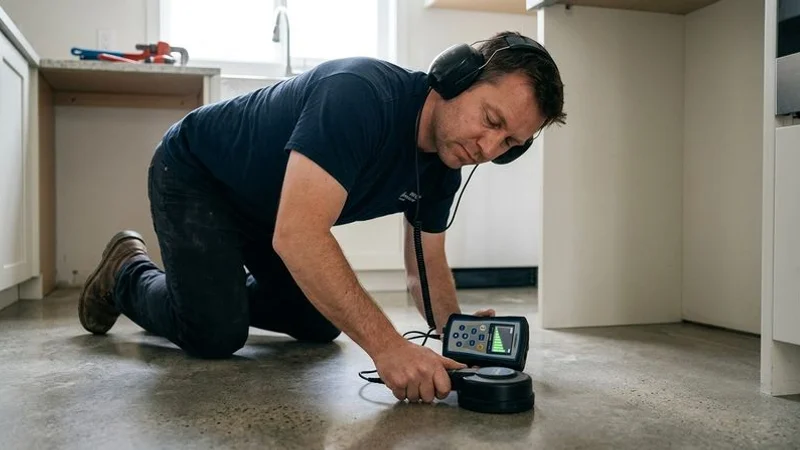
Subterranean slab faults are arguably the most destructive and difficult issues a homeowner can face. Pressurised water can travel for metres along the underside of the concrete before finally seeping up into your hallway carpet.
Our teams provide comprehensive slab leak detection to map these hidden hazards accurately. Industry-standard slab diagnostics involve highly specialised gear.
- Acoustic correlation profiling: Attaching sensors to two separate accessible points on the pipe network mathematically triangulates the exact point of failure.
- Tracer gas injection: Pumping a safe Variotec gas mixture of 95% nitrogen and 5% hydrogen into the emptied water lines reveals where the leak rises through solid concrete.
- Ground-penetrating radar: Scanning the floor maps out the exact depth and layout of the embedded pipework.
We consistently use hydrogen tracer gas to pinpoint slab fractures to within a 150mm radius. This extreme accuracy drastically reduces the amount of expensive flooring and foundation material requiring removal.
Underground Supply Pipe Leaks
The primary copper supply line running from the street meter to your house often passes under driveways, mature trees, and retaining walls. Sydney Water only takes responsibility for the infrastructure up to the meter itself.
Our technicians frequently find that older galvanised lines buried in sandy soil never show surface puddles. Specialised electromagnetic locators, like the Ridgid NaviTrack, allow a precise trace of your main water service path.
We deploy acoustic ground microphones to walk that exact route and listen for the distinct sonic frequency of escaping water. This targeted sonic method finds the break without requiring a backhoe to tear up your entire front garden.
Leaks in the Sewer or Stormwater System
Drainage issues behave very differently from pressurised supply line faults. These gravity-fed systems rarely cause immediate indoor flooding, but they create massive long-term structural headaches.
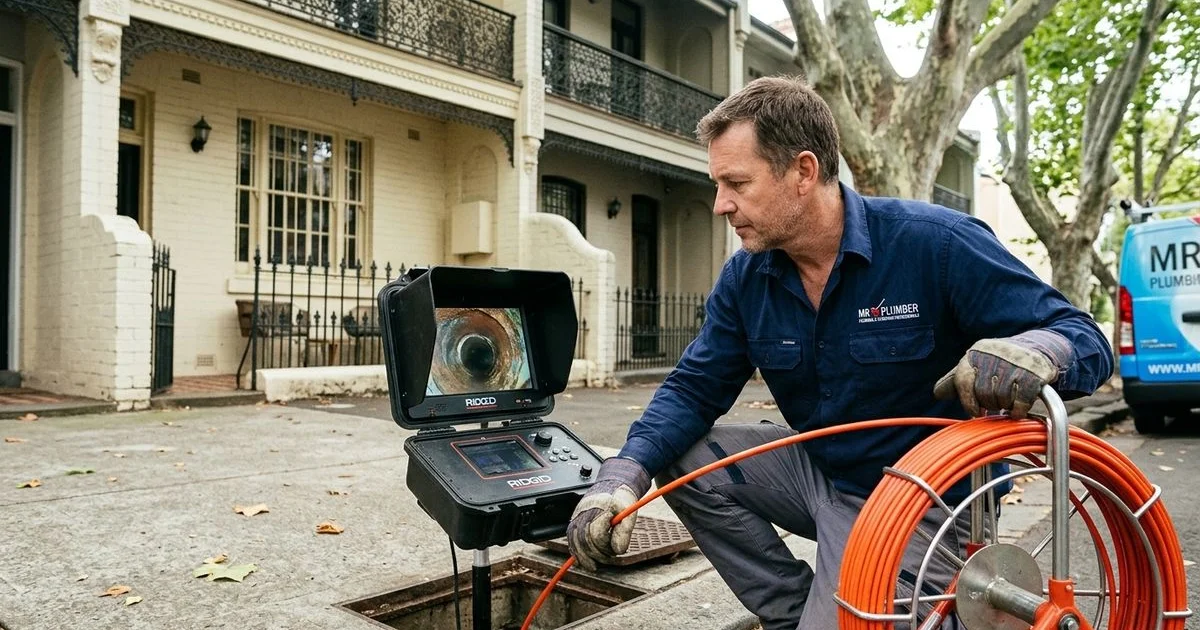
Our drainage specialists look for secondary indicators like persistent bad odours, slow-draining sinks, or sudden cracks in brick walls caused by sinking foundations. High-resolution CCTV drain cameras, such as the Ridgid SeeSnake, inspect the internal condition of your PVC pipes.
We use this live video feed to reveal root intrusions from large street trees, collapsed pipe joints, and heavy scale buildup. Locating the exact metre mark of the blockage allows for targeted trenchless pipe relining instead of digging a massive trench.
The Cost of DIY vs Professional Detection
Understanding the financial side of water management helps you make the right call for your property. A failed plumbing fitting can rack up thousands in restoration costs, making early professional intervention highly cost-effective.
Our pricing structure is designed to be completely transparent. Here is a realistic look at the average 2026 costs associated with finding a hidden plumbing fault in Sydney.
| Approach | Estimated Cost | What You Actually Get |
|---|---|---|
| DIY Home Inspection | Free | Basic confirmation that a problem exists and identification of highly visible faults. |
| Standard Visual Plumber Inspection | $80 to $150 | An experienced, licensed assessment of all accessible fixtures and surface pipework. |
| Professional Electronic Leak Detection | $300 to $800 | Pinpoint accuracy for hidden wall and slab faults using acoustic and thermal technology. |
| CCTV Drain Camera Inspection | $250 to $500 | A full visual recording of the interior condition of your deep sewer and stormwater lines. |
We always tell our clients that spending a few hundred dollars on accurate electronic detection is a smart investment. Guessing where a pipe is broken and smashing out the wrong section of expensive bathroom tiling costs significantly more.
Our Recommended Approach: Can You Find a Leak Yourself, or Should You Hire a Pro?
Taking a logical, step-by-step approach is the best way to handle suspected water loss. Jumping straight to demolition is never the right answer.
Our workflow focuses on ruling out the simple things first before moving to heavy diagnostic equipment. Follow this sequence to protect your home and your bank account.
- Start with your own basic DIY checks. Running the meter test, performing the food colouring toilet test, and doing a thorough visual sweep cost absolutely nothing.
- If nothing obvious presents itself, bring in the experts. Call Mr Plumber on 1800 247 474 to book an advanced leak detection service.
- Act immediately. Every single day you delay, the escaping moisture undermines your foundations and drives up your quarterly utility bill.
We have seen far too many minor pinhole fractures evolve into catastrophic ceiling collapses because they were ignored for a month. The upfront cost of a professional assessment is negligible compared to repairing rotted structural timber and replacing waterlogged carpets.
Need Help Finding a Leak?
If your own detective work has hit a dead end, it is time to bring in the heavy machinery.
So, Can You Find a Leak Yourself, or Should You Hire a Pro?
Our licensed technicians provide comprehensive leak detection services across Sydney’s Eastern Suburbs to answer that question for you. Rapid response teams proudly service Bondi, Randwick, Coogee, Woollahra, and all surrounding neighbourhoods.
We locate hidden faults with minimal disruption to your daily life, allowing the crew to fix the problem permanently at the source. For more specific diagnostic tips, read our detailed guide outlining the 8 signs of a hidden water leak.
Call Mr Plumber directly on 1800 247 474 to secure your booking today. Fast action is the only way to stop a minor drip from becoming a major disaster.