We see it every week across the Eastern Suburbs. Many property managers are asking about Electric vs Gas vs Heat Pump Hot Water Systems: Which Is Best for Sydney Homes?
Our professional service team knows that making the wrong call can cost thousands in unnecessary running expenses over the next decade. The 2026 market data reveals that rising local energy rates make efficiency more critical than ever.
We will break down these exact figures to compare real-world operational costs.
Let us examine the facts, look at what the latest data is telling us, and explore a few practical ways to respond.
Electric Hot Water Systems
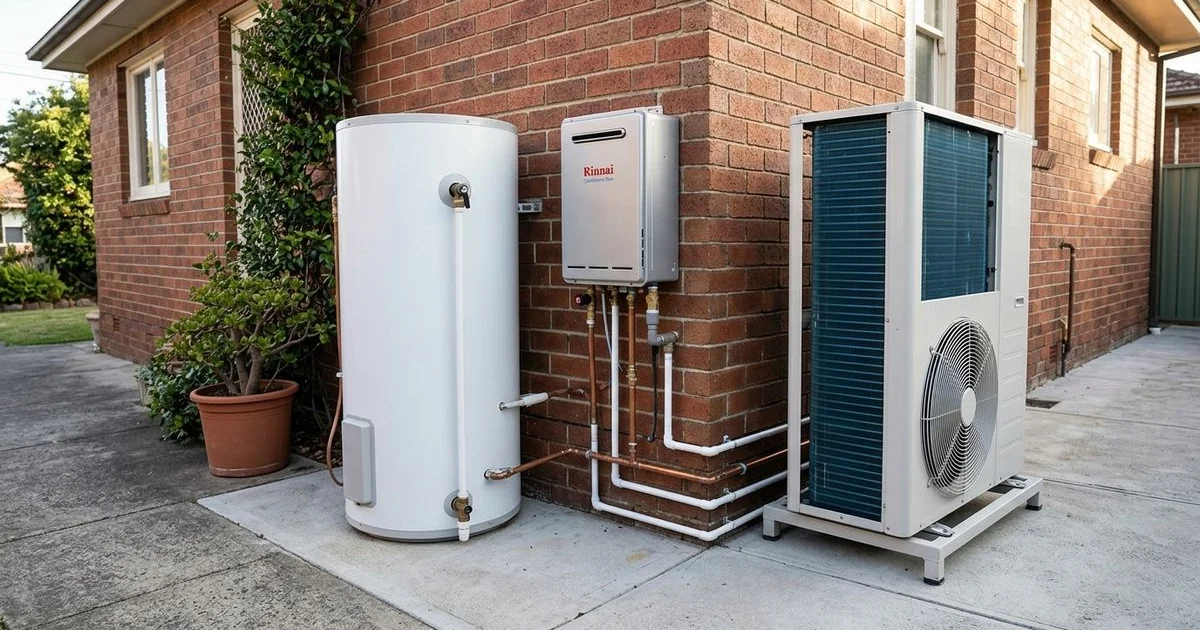
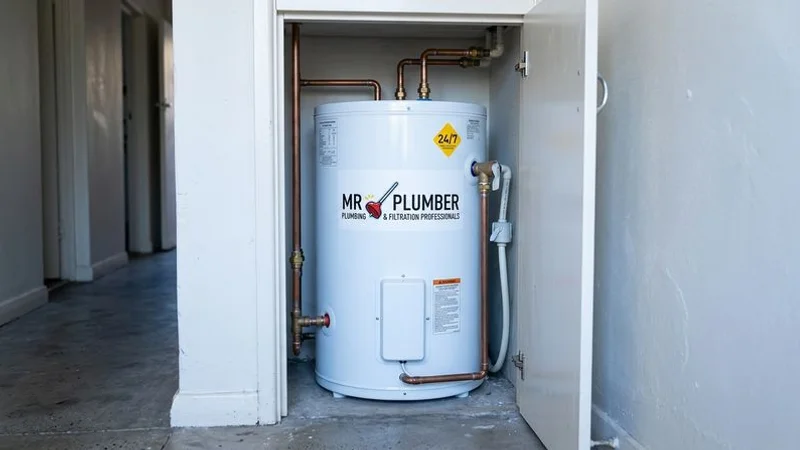
Our plumbers often replace older Dux or Rheem units that have served faithfully for well over a decade. These traditional setups heat water using one or two resistive heating elements inside an insulated storage cylinder. We notice that cold water enters the bottom of the tank, gets heated by a 3.6kW or 4.8kW element, and rises to the top for use.
These units are available in two primary configurations:
- Storage tanks (25L to 400L): Heat and store water for use throughout the day.
- Instantaneous (continuous flow): Heat water on demand as you use it.
Pros
We find that strict renovation budgets often dictate this choice. Compact 50L units from brands like Stiebel Eltron fit perfectly under kitchen benches in tight layouts. Our technicians appreciate how easily these indoor-friendly systems integrate into apartments in Bondi Junction, Edgecliff, and Double Bay.
- Lowest purchase price: Expect to pay from $800 to $2,000 fully installed.
- Simple installation: There is no gas connection or outdoor compressor unit required.
- High reliability: Fewer moving parts means fewer mechanical components can fail.
- Space-saving designs: Point-of-use units eliminate the need for long pipe runs.
Cons
The recent 2026 analysis shows that operating these older style cylinders is getting increasingly expensive. Our records show Ausgrid electricity prices in Sydney are sitting between 36 and 40 cents per kWh for standard residential usage. This high tariff makes traditional resistive water heating the most expensive option on the market. We always remind clients to consider these major drawbacks:
- Highest running costs: You pay a premium for every drop of hot water.
- Slow recovery: A depleted 250L tank can take several hours to fully reheat on an off-peak tariff.
- Regulatory restrictions: NSW BASIX requirements heavily restrict new electric storage installations to reduce grid strain.
- Carbon footprint: These systems produce significant greenhouse gas emissions unless powered by a large rooftop solar array.
Best For
Small apartments, rental properties, and budget-conscious installations where gas is entirely unavailable make the most practical sense. We typically recommend these units only for very specific, constrained situations.
Gas Hot Water Systems
Many local families rely on natural gas to keep their morning routines running smoothly without interruptions. Our standard recommendation often involves continuous flow models, which dominate the Sydney market due to their space-saving efficiency. These units use a natural gas or LPG burner to heat water rapidly. We install them in two main configurations to suit different spaces:
- Storage tanks: A gas burner beneath the tank heats water continuously to maintain the set temperature.
- Instantaneous (continuous flow): A powerful burner fires only when a hot tap is actively opened.
Pros
Market-leading models like the Rinnai Infinity 26 or the Bosch OptiFlow are famous for their reliability and impressive high flow rates. We see excellent performance benefits from gas for high-demand households. Instantaneous models ensure you never run out, even with back-to-back family showers. Our customers love the proven technology and fast recovery times.
Here are the main advantages:
- Lower base usage rates: Natural gas traditionally costs less per megajoule than standard grid electricity costs per kilowatt-hour.
- Fast recovery: Storage models reheat depleted water much faster than standard electric elements.
- Compact design: Wall-mounted continuous flow units save valuable courtyard or garden space.
- Proven technology: Parts are readily available, and local tradespeople understand the mechanics perfectly.
Cons
Our team always warns clients to monitor the changing residential energy landscape. Daily gas supply connection charges in NSW have increased significantly, averaging around 88 cents per day in 2026. We notice this fixed daily fee eats directly into your anticipated annual savings. Consider these limitations before choosing gas:
- Higher purchase price: Expect to pay between $1,200 and $3,500 fully installed.
- Connection requirements: Not all properties have natural gas, and bottled LPG is substantially more expensive to run.
- Strict installation rules: Gas units require specific clearances from doors and windows for safe exhaust ventilation.
- Mandatory maintenance: Manufacturers require periodic servicing every 2 to 3 years to prevent internal heat exchanger blockages.
Best For
Our plumbers suggest this setup primarily for families with heavy water usage and existing gas connections. Homes requiring multiple simultaneous showers are perfect candidates for large continuous flow gas models.
Heat Pump Hot Water Systems
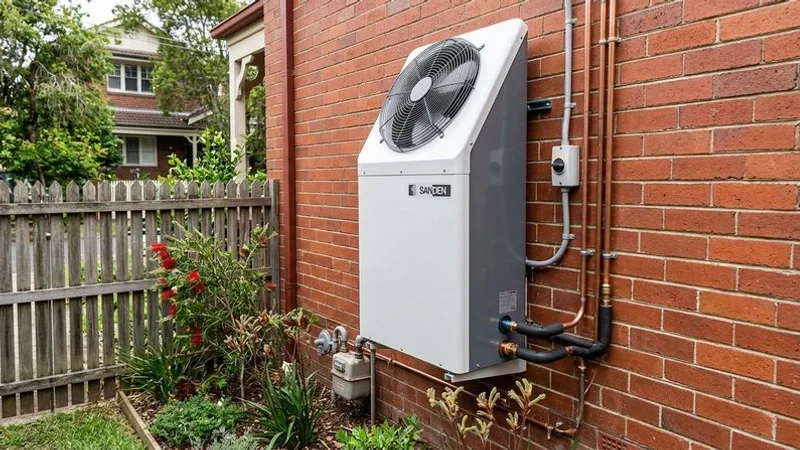
We track field data closely, and this modern technology represents the biggest shift in residential plumbing efficiency seen in years. A heat pump extracts ambient warmth from the outside air to heat your water, working exactly like a reverse-cycle air conditioner running in heating mode. Our recent installations of premium systems like the Reclaim Energy CO2 heat pump routinely achieve an incredible Coefficient of Performance (COP) up to 6.02. This rating means for every 1kW of electricity used, the system generates over 6kW of actual heating energy.
Pros
We consider extreme electrical efficiency to be the defining feature of these modern units. Leading brands use advanced refrigerants to pull heat from the air even on cold winter nights. Our clients enjoy massive savings because these systems are 60% to 75% cheaper to run than traditional electric resistance cylinders. These are the major benefits:
- Massive government rebates: Upfront NSW Energy Savings Scheme (ESS) incentives can reduce the purchase cost by $640 to over $1,000.
- Eco-friendly operation: They offer the lowest carbon footprint of all standard heating options.
- Solar integration: Pairing an intelligent unit with rooftop solar panels can reduce your water heating bills to near zero.
- Grid independence: You can disconnect from the gas network entirely to save on those 88-cent daily utility supply connection fees.
Cons
We want you to know the practical physical limitations before committing to an upgrade. Installation costs range from $3,000 to $5,500 before you apply any state government rebates. Our installers also point out that the outdoor compressor generates noticeable noise. Standard budget units produce around 48 decibels, while premium models like the Sanden Eco Plus operate at a whisper-quiet 37 decibels.
- Space requirements: The combined tank and compressor unit needs adequate airflow and takes up more room than a slim gas box.
- Cold weather drops: Efficiency decreases slightly in freezing temperatures, though this is rarely an issue in coastal Sydney.
- Slower recovery: Heat pumps take longer to reheat a fully depleted tank compared to continuous flow gas.
Best For
We see environmentally conscious property owners achieving the fastest financial return on investment with this option. Anyone with existing solar panels or an ageing, energy-hungry electric cylinder should make this their top upgrade choice.
Cost Comparison for 2026
Our team believes that understanding the true financial impact requires looking far past the initial retail price tag. Let us examine the projected costs over a standard decade of residential ownership using verified 2026 tariff data.
| Factor | Electric Storage (250L) | Gas Instantaneous (26L) | High-Efficiency Heat Pump |
|---|---|---|---|
| Purchase & install | $1,200 to $2,200 | $1,800 to $3,500 | $3,500 to $5,500 |
| After NSW rebates | N/A | N/A | $2,500 to $4,500 |
| Annual running cost | $1,100 to $1,400 | $550 to $850 | $180 to $380 |
| 10-year total cost | $12,200 to $16,200 | $7,300 to $12,000 | $4,300 to $8,300 |
| Typical Lifespan | 8 to 12 years | 10 to 15 years | 10 to 15 years |
We base these calculations on a family of four facing current Ausgrid 38-cent electricity tariffs and 88-cent daily gas supply charges. Actual household costs will vary depending on your specific daily usage patterns and solar PV generation. Our long-term data confirms the heat pump clearly delivers the lowest total cost of ownership over a 10-year window.
Electric vs Gas vs Heat Pump Hot Water Systems: Which Is Best for Sydney’s Eastern Suburbs?
Local climate conditions play a massive role in system efficiency and longevity. Our installers know Sydney features mild winters where temperatures rarely drop below 8 degrees Celsius in the Eastern Suburbs. This exact temperature range allows heat pumps to operate at peak efficiency year-round. We also help coastal clients manage the hidden challenge of aggressive salt air corrosion. Upgrading to a marine-grade stainless steel tank is a smart move if you live within a kilometre of the ocean in places like Coogee, Bronte, or Maroubra.
Our Recommendations by Property Type
We customize our advice to match the physical constraints of your specific building. Here is a quick breakdown of the smartest choices based on property style:
Apartments and units (Bondi Junction, Edgecliff, Double Bay):
- Best option: Electric instantaneous or a small 170L heat pump if you have a suitable, well-ventilated balcony.
- Alternative: Gas instantaneous works beautifully if the building already has an active, certified gas main.
Terraces and semi-detached (Paddington, Darlinghurst, Surry Hills):
- Best option: Gas instantaneous saves precious, limited courtyard space.
- Alternative: A split-system heat pump works well if you have adequate outdoor ventilation and safe distance from your neighbour’s boundary line.
Houses (Randwick, Coogee, Woollahra):
- Best option: Heat pumps allow you to maximize government rebates and slash your long-term utility bills.
- Alternative: High-capacity gas instantaneous systems serve as a strong secondary choice for very large families.
Homes with solar panels:
- Best option: A premium heat pump paired directly with your solar inverter creates near-zero running costs.
- Pro Tip: Set the unit’s built-in timer to run the compressor between 10 AM and 2 PM to strictly consume your free, self-generated solar energy.
NSW Government Rebates Explained
Our office handles this complex administrative paperwork daily for local residents. The state government actively wants residents to transition away from inefficient energy sources through the Energy Savings Scheme (ESS). We secure these discounts by creating Energy Savings Certificates (ESCs) based on the specific efficiency rating of your new unit. Depending on the model, the upfront rebate can reduce your final invoice by $640 to over $1,000 when replacing an old electric storage tank.
Our team processes this discount immediately at the point of sale. You never have to wait weeks for a government cheque to arrive in the mail.
Need Help Choosing?
We know that sudden plumbing breakdowns create incredibly stressful mornings. Call Mr Plumber on 1800 247 474 if your current hot water system is leaking, failing, or driving up your utility bills.
Our licensed technicians will assess your property and discuss your exact daily usage needs. Determining Electric vs Gas vs Heat Pump Hot Water Systems: Which Is Best for Sydney Homes? is much easier with an expert on site.
We install and service all three major technologies across the Eastern Suburbs. Explore common issues in our troubleshooting guide to see if a simple fix is possible right now.
Our staff provides transparent local pricing for every job. Review our replacement cost guide for a detailed breakdown.
We are ready to restore your hot water today.