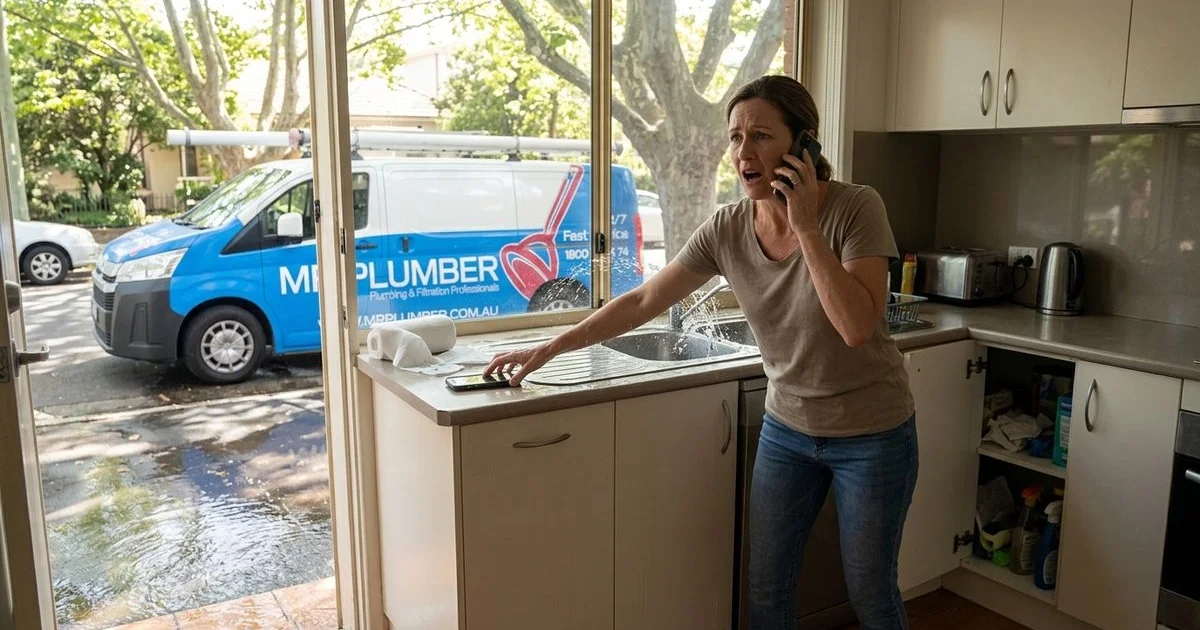
You know exactly how fast a small leak turns into a full-scale property disaster.
Our crews see the aftermath of burst pipes every single day across Sydney. This type of incident now drives a massive portion of property claims, with 2026 data from insurers like Suncorp revealing that average water damage repair costs exceed $14,000 AUD.
The difference between a simple mop-up and a total floor replacement often comes down to the first ten minutes. We put together this emergency plumbing checklist, covering what to do before the plumber arrives, to help you take control before the technician even parks in your driveway.
Review the exact steps below to secure your water supply, protect your valuables, and safely manage the situation.
Step 1: Shut Off the Water Supply
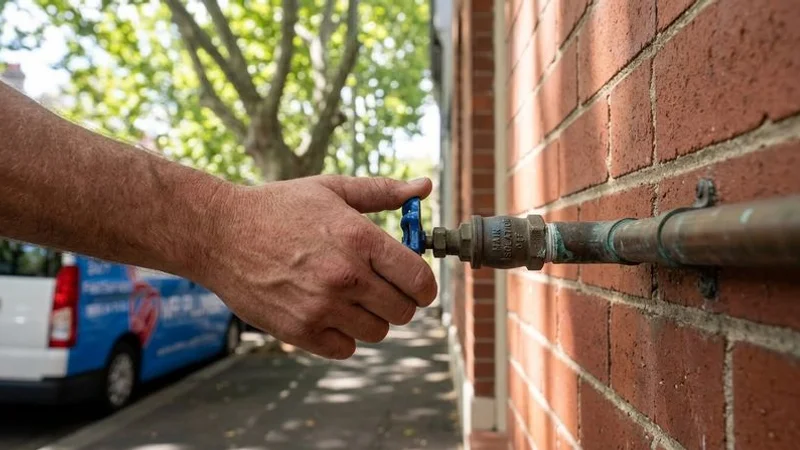
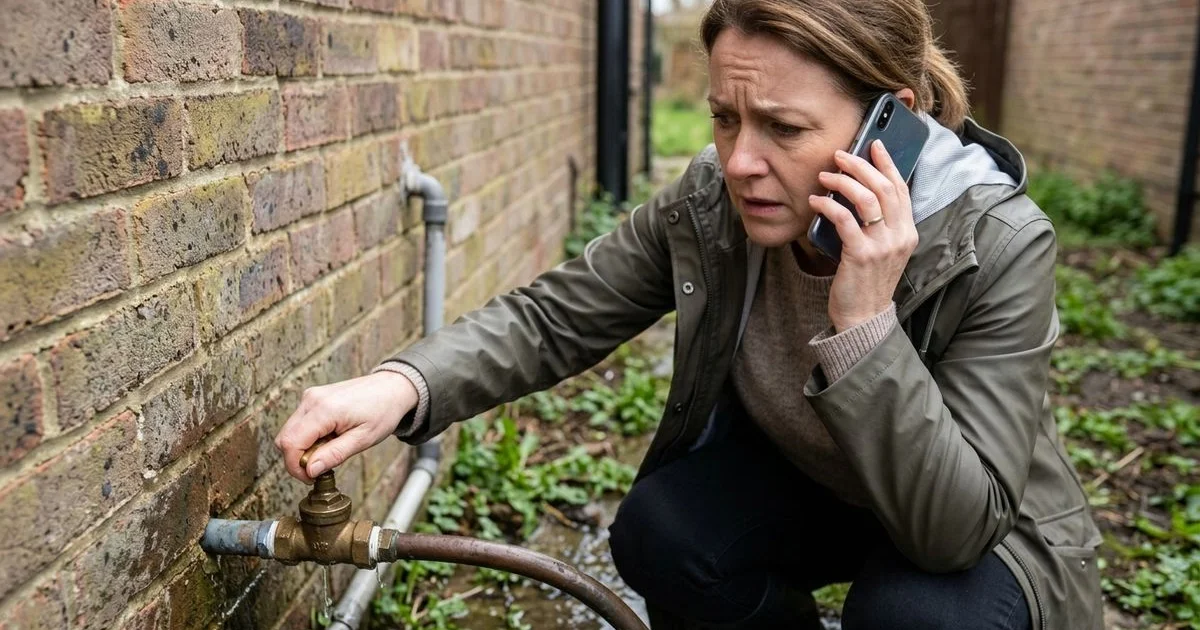
Our first priority on any call is immediately stopping the flow. The main shutoff valve serves as your best defence against catastrophic indoor flooding.
We frequently find these essential controls near the front boundary or right beside your Sydney Water meter. Older residential properties in suburbs like Paddington or Surry Hills sometimes hide them inside small metal-framed boxes nestled in a garden bed.
Locating this valve right now is the smartest preventative step you can take. It takes only a few seconds but saves thousands in potential repair bills.
- Turn the valve clockwise until it stops completely to cut supply to the entire house.
- Inspect individual fixture isolation valves if the leak is isolated to a single location.
- Check the mini stop tap beneath the sink, as flexi-hoses are a massive culprit behind costly claims.
- Look in communal utility areas if you live in a strata block in Bondi Junction or Coogee.
Our analysis of 2025 Suncorp insurance data shows that failed flexi-hoses cause roughly 22 percent of household water claims. A single burst braided hose can leak up to 20 litres per minute, resulting in an average damage bill of over $27,500 AUD.
Step 2: Turn Off the Hot Water System
Our technicians strongly recommend killing the power to your heating unit immediately after securing the mains. A standard 250L electric storage tank from leading brands like Rheem or Dux can overheat quickly, burning out its internal element in minutes if it runs dry.
We see this secondary failure add a totally avoidable $300 to $500 AUD replacement cost to the final repair bill. Securing your specific system requires locating the correct power or fuel source using the methods below:
| System Type | Safe Shutdown Action | Potential Replacement Cost if Damaged |
|---|---|---|
| Electric Storage | Switch off the dedicated circuit breaker at the main switchboard. | $1,200 to $2,800 AUD |
| Gas Systems | Set the unit dial to the pilot setting or rotate the gas valve to the off position. | $1,800 to $3,200 AUD |
| Heat Pumps | Turn off the power at the external isolator switch near the outdoor compressor unit. | $3,500 to $6,000 AUD |
Step 3: Open Taps to Drain Remaining Water
We always drain the residual water from the lines to relieve ambient pressure. The Australian standard for residential water pressure caps at 500 kPa, but Sydney mains supply can sometimes exceed 700 kPa in newer subdivisions.
High pressure leaves a significant volume of liquid trapped in the pipes even after the main valve is shut. Our crews use the lowest point in the house to clear these lines quickly.
A laundry tub tap or an outdoor garden hose connection works perfectly for this job. Opening these fixtures directs the remaining water outside or down a safe drain.
Pro Tip: Opening a low-lying tap stops the aggressive spraying at the leak site almost instantly, buying you valuable time to contain the mess and protect your floors.
We find that this simple pressure relief tactic is the secret to minimising secondary water spray. It protects your drywall from further saturation.
Step 4: Contain the Water
Our damage mitigation process starts the very second the spray stops flowing. Engineered oak and Blackbutt timber floors can begin warping within just 48 hours of exposure.
The average cost to replace premium engineered timber flooring in Sydney now ranges between $105 and $200 AUD per square metre installed. We use heavy-duty truck-mounted extraction vacuums, but standard household items work well in the crucial first few minutes.
Acting fast limits the absorption rate into your porous building materials. Follow these steps to limit your exposure to that average $14,000 AUD restoration cost:
- Mop up standing puddles immediately to protect your skirting boards and subfloor structures.
- Place heavy buckets directly under active drips and lay down thick towels to absorb the spread.
- Move electronics, expensive rugs, and upholstered furniture far away from the wet zone.
- Turn off the electricity at the main switchboard if moisture nears any wall outlets.
Step 5: Document the Damage
We strongly advise clients to take comprehensive photos before starting the heavy cleanup phase. Most Australian home insurance policies classify this type of incident under “escape of liquid” coverage.
Insurers like Youi and Budget Direct require clear visual evidence of the exact source to process these specific claims smoothly. Our experience shows that well-documented files get approved much faster by loss assessors.
Failing to capture the initial scene can sometimes give insurers grounds to question the severity of the event. Capture these specific details clearly on your smartphone:
- The exact source of the leak or ruptured fitting before any repairs take place.
- The full spread of the moisture across the floor, walls, and cabinetry.
- Damage to specific belongings, soft furnishings, and structural building materials.
- Any pre-existing mould or discolouration in the surrounding area to separate old issues from the new event.
Step 6: Check for Gas Leaks
Our certified gas fitters treat potential leaks with extreme caution during any property call. Older properties in suburbs like Woollahra and Vaucluse often feature gas lines running very close to the internal water pipes.
We remind every homeowner that natural gas contains a safety additive called mercaptan, giving it a distinct rotten egg smell. A shifting water pipe can easily stress and crack an adjacent aged gas line.
Treating a suspected gas leak requires immediate evacuation and strict safety compliance. Follow these mandatory rules if you catch that distinct sulphur scent:
- Leave all electrical switches exactly as they are and do not use your mobile phone inside the house.
- Open your doors and windows to ventilate the accumulated fumes if it is safe to do so.
- Evacuate the property immediately and stand at a safe distance on the street.
- Call the Jemena Gas Networks emergency line on 131 909, operating 24/7 across the Greater Sydney region.
Step 7: Call Your Emergency Plumber
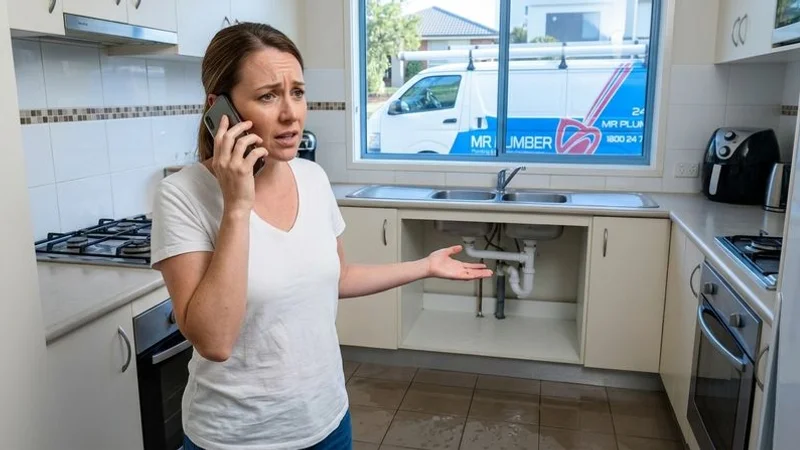
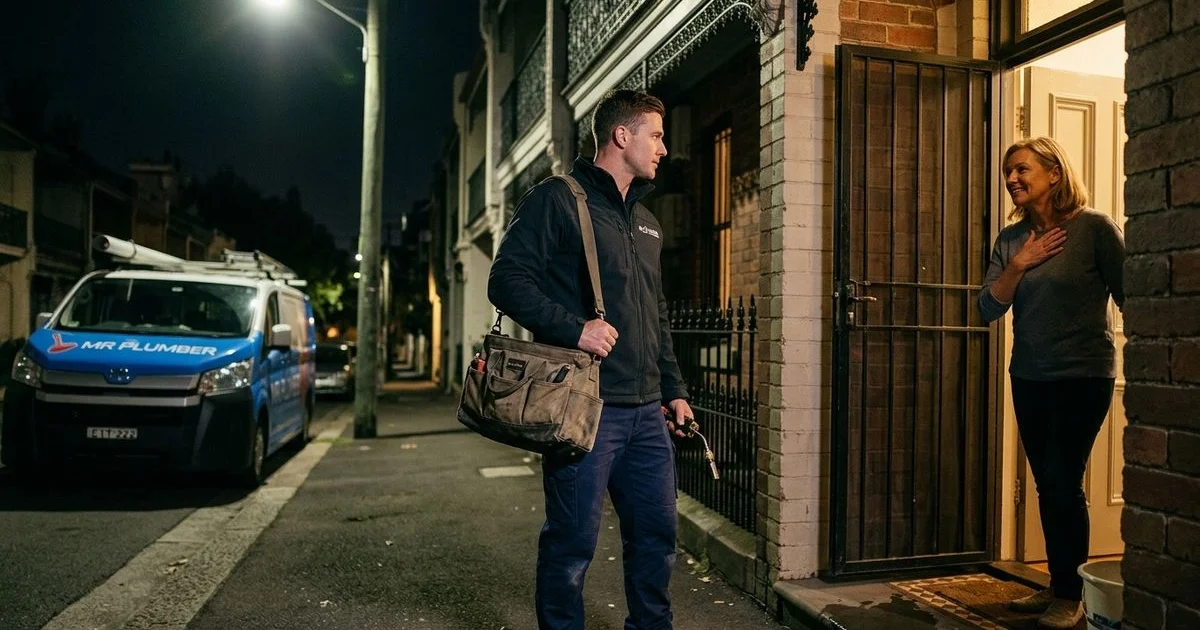
Our dispatch team is ready to respond the moment you secure the site and ensure everyone is safe. Calling Mr Plumber on 1800 247 474 guarantees a fast response across the Eastern Suburbs.
We need a few specific details to prepare our technicians with the right parts for the job. Clear communication helps us minimise the time it takes to get your property back to normal.
Our emergency plumbing vehicles carry the specific replacement valves and commercial-grade pressure testing equipment needed to fix most common blowouts on the spot. We bring the complete shop to your driveway to ensure a permanent repair.
- Your exact address and the fastest street access point for our service vehicle.
- A clear description of the failure and precisely where the leak is located.
- The containment and mitigation steps you have completed so far.
- Any related warning signs like suddenly low pressure or discoloured tap water.
Step 8: Prevent Further Damage While Waiting
We see a lot of well-intentioned DIY fixes make the original problem significantly worse. Standard hardware store duct tape simply cannot hold back 500 kPa of municipal water pressure.
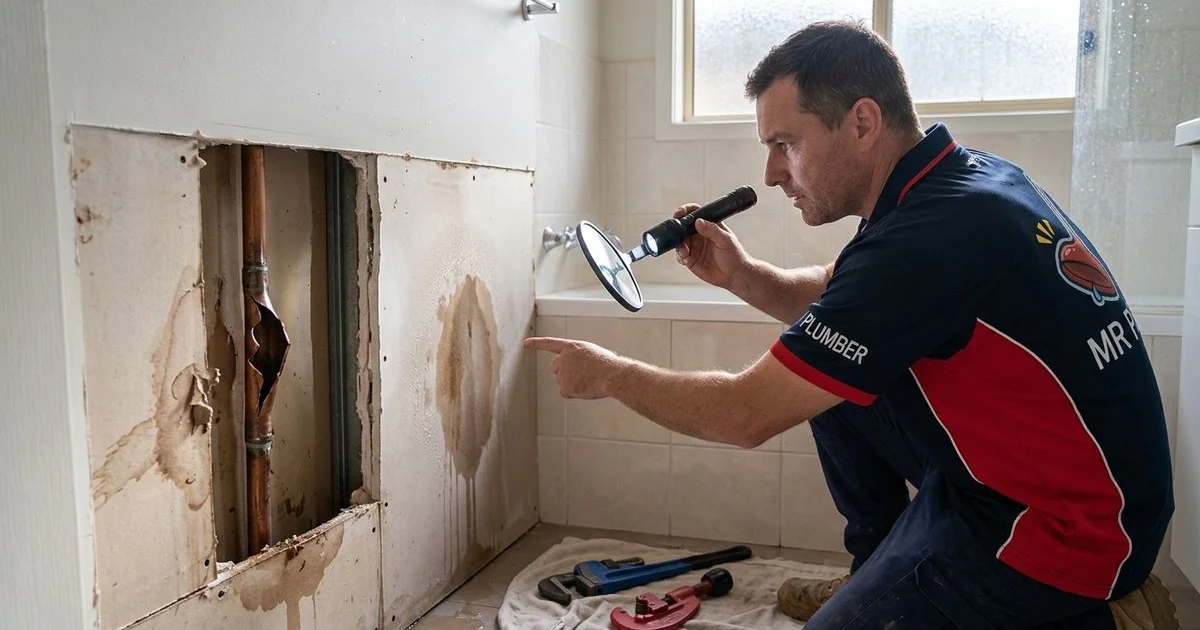
Our specialists prefer you stay safe, keep the area clear, and let the professionals handle the pressurized lines. Attempting to clamp a live line often results in the copper splitting further down the wall cavity.
Protecting yourself is more important than saving a piece of plasterboard. Review these vital safety warnings before taking any further action:
- Never attempt temporary structural repairs on gas lines or split copper pipes.
- Keep pets and young children completely out of the flooded room to prevent slips and electrical hazards.
- Place a large 20L bucket under a sagging Gyprock ceiling and carefully pierce a small 5mm hole with a screwdriver to drain the pooling liquid safely.
What NOT to Do During a Plumbing Emergency
Our drain specialists frequently deal with the expensive fallout of panicked, split-second decisions. Pouring caustic supermarket gels down a blocked drain creates an intense exothermic chemical reaction.
We have seen this extreme heat literally warp and melt standard PVC pipes, turning a minor clog into a complete system replacement. Professional high-pressure water jetting tools clear blockages safely without risking your expensive underground infrastructure.
Taking the wrong action can instantly void your home insurance coverage. We want you to avoid these common mistakes at all costs:
- Do not ignore a slow drip, as it often points to a larger, hidden failure behind the Gyprock walls.
- Avoid using acidic or chemical drain cleaners to clear a stubborn physical obstruction.
- Never flush a toilet if the ceramic bowl is already full or backing up into the adjacent shower grate.
Be Prepared Before It Happens
We know from daily experience that a little preparation prevents massive, unexpected repair bills. Finding a rusted shutoff valve in the dark during a severe storm is an incredibly stressful experience.
Our team recommends taking just ten minutes this weekend to locate and test your critical property controls. You can even purchase brightly coloured plastic identification tags from local hardware stores like Bunnings to mark your mains clearly.
Being proactive gives you complete control during a sudden crisis. Complete this short readiness checklist today:
- Locate and test your main water, hot water, and gas isolation valves so you are ready to act.
- Save Mr Plumber at 1800 247 474 directly in your phone contacts list for instant access.
- Book an annual plumbing inspection to check high-risk components like aging braided flexi-hoses.
- Keep a dedicated emergency bucket equipped with a waterproof LED torch, heavy towels, and a basic crescent wrench.
Need Help Right Now?
Our emergency crews are on standby to protect your home and restore your services. A fast, professional response stops the destruction and gets your household running normally again.
Call Mr Plumber on 1800 247 474 right now for immediate emergency plumbing support across Bondi, Randwick, and the greater Eastern Suburbs.
Let our technicians handle the complex repairs so you can relax.