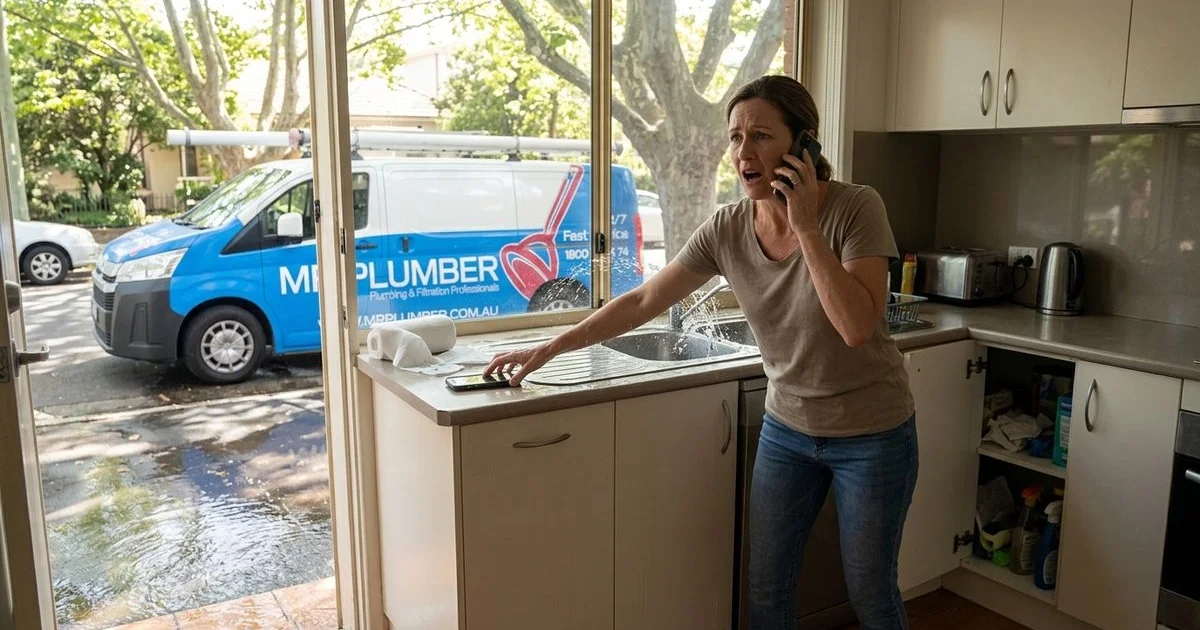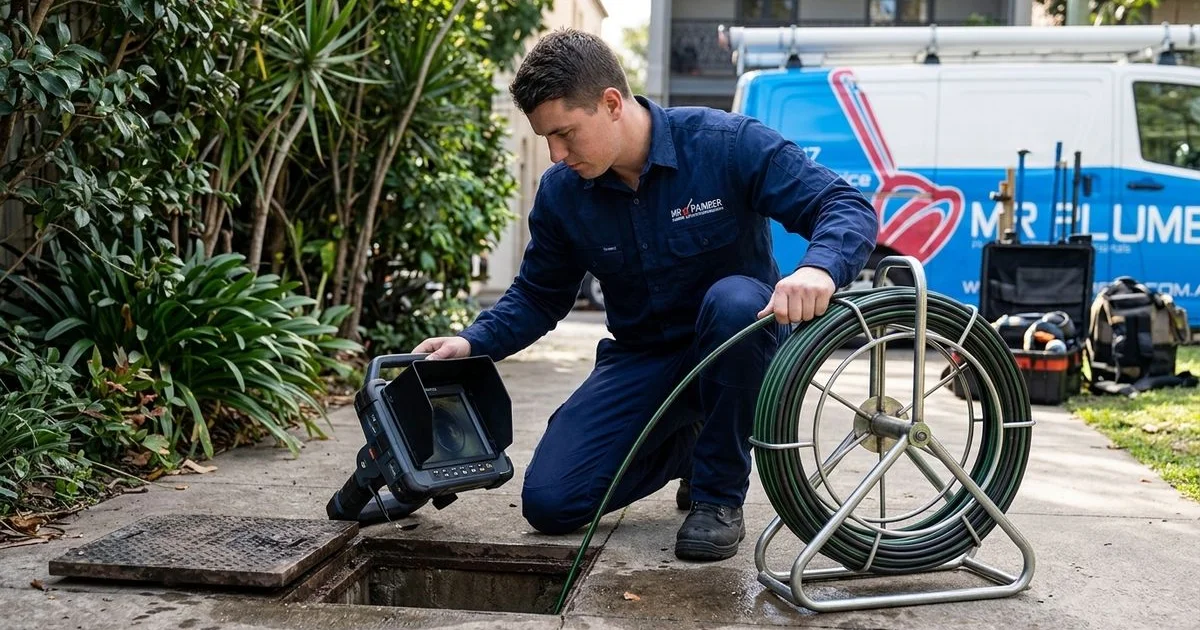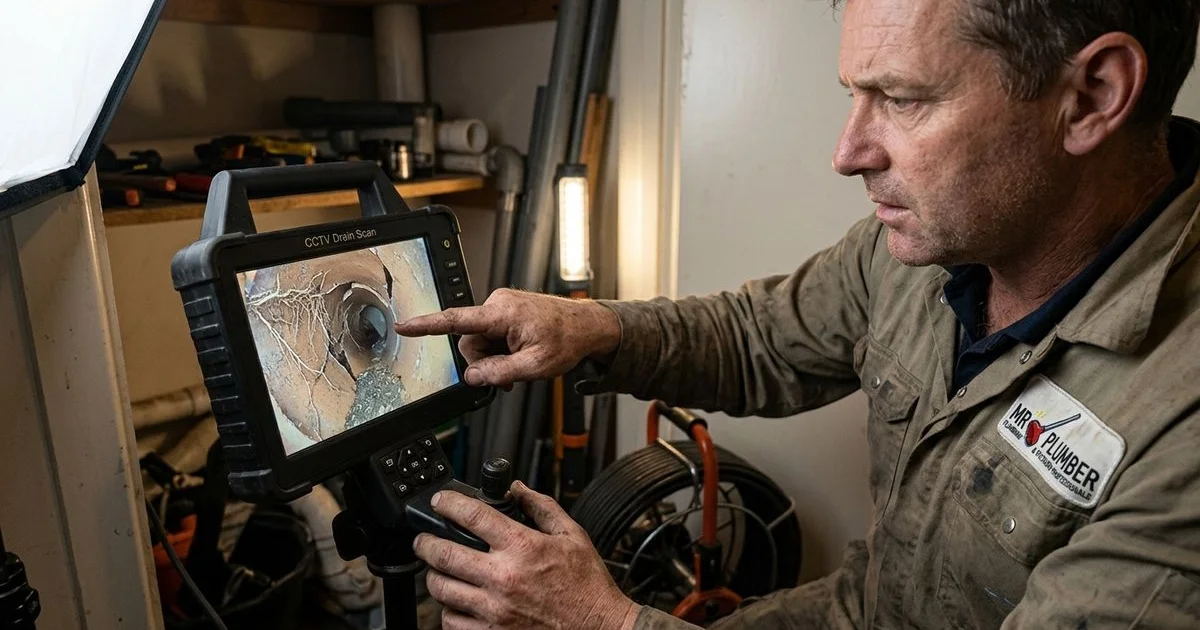
We see failed hot water units on our service calls every single week across the Eastern Suburbs. As property managers and busy homeowners, you know replacing a commercial or residential water heater is a massive hit to the maintenance budget.
Our data shows these emergency replacements easily cost between $1,000 and well over $5,000 depending on the model.
That steep price tag is exactly why waiting for a tank to burst is a costly mistake. The key takeaway from our field experience is that learning how to extend your hot water system can actually double the reliable life of your storage tank with just a few basic maintenance steps. Let’s look at the underlying causes of system failure and walk through the exact steps to protect your investment.
Tip 1: Check and Replace the Sacrificial Anode
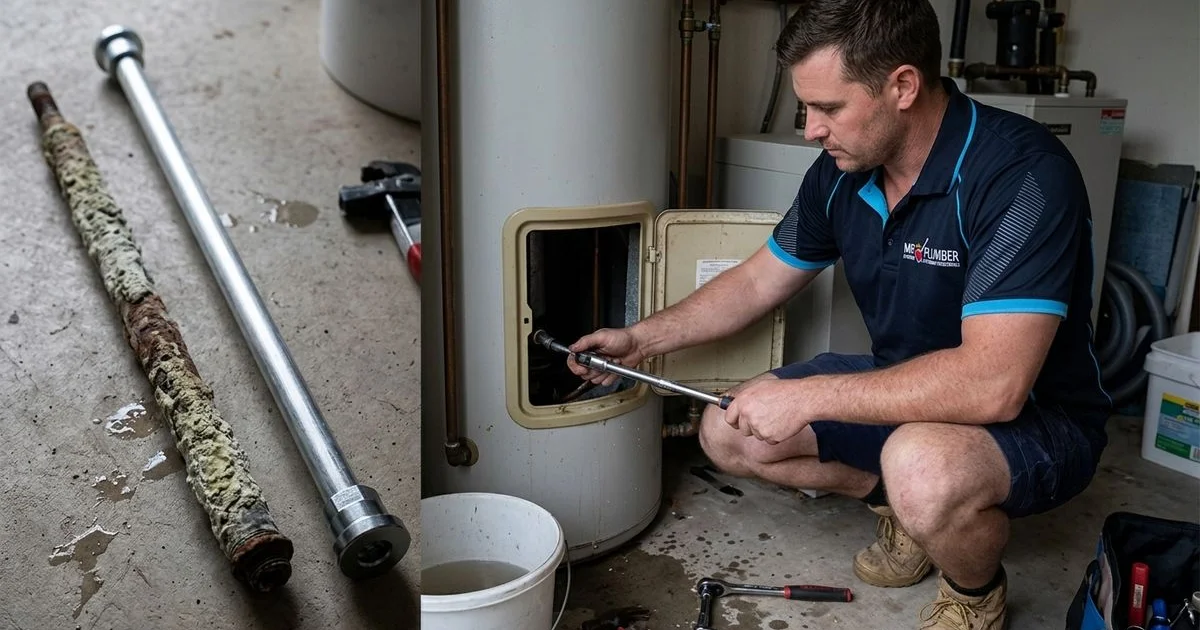
The sacrificial anode is a critical metal rod sitting directly inside your storage tank. Major Australian manufacturers like Rheem and Dux install these rods to intentionally rust. Our maintenance crews find that this simple component is the only thing standing between your steel tank and highly corrosive water. The corrosive elements in your water supply attack this anode instead of the steel walls of your tank.
Why It Matters
Internal rust becomes unstoppable the moment this rod is fully consumed. Pinholes quickly develop inside the cylinder wall. We regularly pull 250-litre tanks out of homes because a cheap, completely dissolved anode was ignored. Replacing a depleted anode rod costs around $150 to $350 installed, which prevents a complete system failure that could cost you upwards of $2,000.
What to Do
- Schedule an inspection: Have a licensed professional inspect the anode every 3 to 5 years.
- Know the replacement threshold: Replace the part as soon as it reaches 50% deterioration.
- Budget accordingly: Expect a new rod to cost between $150 and $350 with installation.
- Match your water type: Install an aluminium (blue) anode instead of standard magnesium if your local water supply in places like Brisbane or Adelaide has high Total Dissolved Solids.
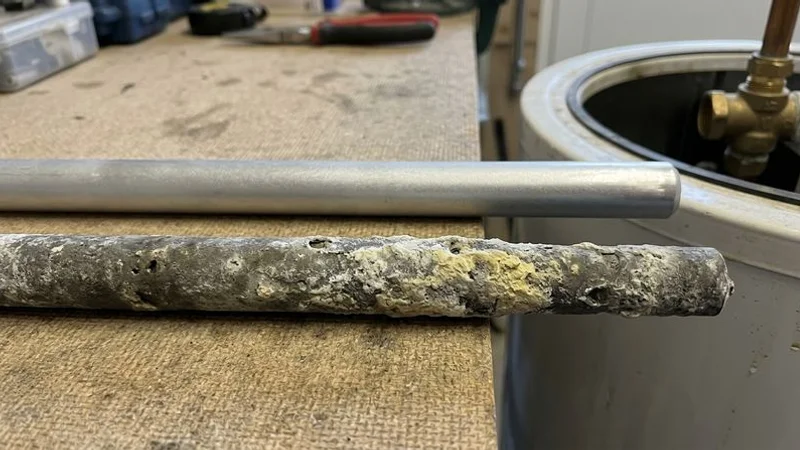
Our Sydney-based plumbers notice that specific water quality in certain coastal suburbs accelerates wear. Swapping an anode every five years is the smartest financial move you can make for your plumbing system.
Tip 2: Flush the Tank Annually
Sand, dissolved minerals, and rust particles slowly settle into a dense sludge at the bottom of your tank. This layer acts like a heavy blanket over the heating element. We see older systems forced to run much longer heating cycles just to push heat through that barrier. Industry data shows this sediment buildup can increase your system’s energy consumption by up to 15%, causing a quiet but steady spike in your quarterly electricity bills.
The True Cost of Sediment
- Reduced thermal efficiency: Your heating element wastes electricity struggling to push heat through the sludge.
- Accelerated bottom rust: Trapped moisture sits against the steel floor of the cylinder.
- Loud kettling noises: Water trapped under the sediment boils rapidly, creating distinct popping or rumbling sounds known as kettling.
How to Flush Your Tank
- Isolate the main power supply for electric units or shut off the gas valve.
- Attach a standard garden hose to the drain valve located near the base.
- Direct the hose out to a garden bed or storm drain.
- Open the valve and allow the water to drain until it runs perfectly clear.
- Close the valve tightly before restoring the power or gas supply.
- Wait for the system to run a full heating cycle before checking the taps.
You might prefer to leave this task to the professionals. We include a comprehensive system flush as part of your annual plumbing maintenance service. Routine visits keep your system running silently and efficiently.
Tip 3: Test the Temperature and Pressure Relief (TPR) Valve
Every storage tank features a TPR valve to release water if internal conditions become dangerous. Most standard mains pressure systems in Australia are rated to trigger at 850 kPa or 1400 kPa, and 99°C. Our technicians know the tank could literally split open if this inexpensive brass valve fails to vent excess pressure.
How to Test It Safely
Testing this valve requires caution because the water inside is scalding hot. Australian Standard AS/NZS 3500.4 dictates that the discharge pipe must safely direct this boiling water away from people.
- Place a large bucket directly beneath the discharge pipe.
- Wear closed-toe shoes and thick gloves to protect against splashes.
- Lift the small lever on the valve body for a few seconds.
- Watch for a strong flow of water that stops immediately upon release.
- Book a replacement if the water barely trickles or refuses to stop dripping.
When to Replace
- The lever mechanism is completely seized and will not move.
- The valve drips constantly throughout the day.
- Five years have passed since the original installation date.
A slow, continuous drip from a faulty TPR valve can secretly waste over 9,000 litres of water a year. We can swap out a faulty valve quickly, usually for around $100 to $200 in parts and labour. This simple fix secures your home against a major catastrophic leak.
Tip 4: Set the Right Temperature
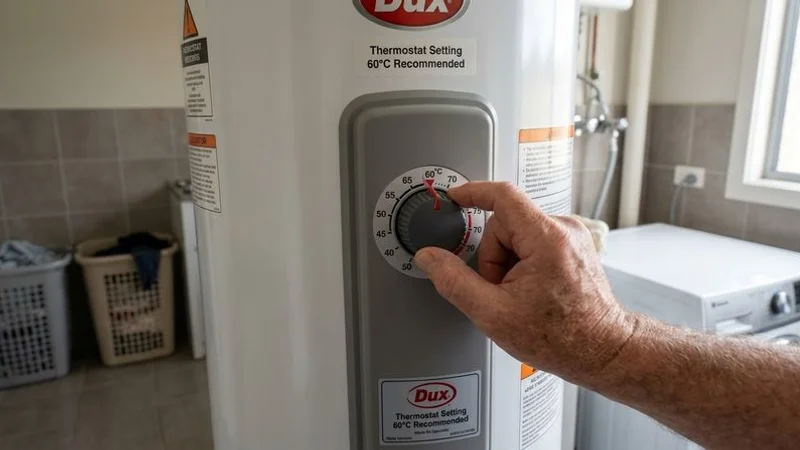
Adjusting the thermostat setting is a balancing act between unit longevity and household safety. Australian Standard AS/NZS 3500.4 legally requires your storage tank to sit at a minimum of 60°C. We strictly follow this mandate because this specific temperature destroys dangerous Legionella bacteria in under 32 minutes.
Why Temperature Matters for Lifespan
- Too Hot (Above 70°C): Extreme heat aggressively accelerates calcium scaling on the heating elements. The element burns out much faster under these harsh conditions.
- Too Cold (Below 60°C): Cooler tanks create a breeding ground for hazardous bacteria. Your family risks exposure to severe respiratory illnesses.
- Just Right (Exactly 60°C): This sweet spot stops bacterial growth while minimising the rate of mineral calcification.
A tempering valve must then reduce this stored water down to 50°C before it reaches your bathroom taps. We install tempering valves because skin exposure to 60°C water causes third-degree burns in just five seconds. Simply dropping a thermostat from 70°C down to 60°C will drastically reduce the workload on your tank and lower your energy costs.
Tip 5: Schedule Professional Servicing
DIY checks are highly practical, but a licensed inspection reveals hidden electrical and structural faults. A comprehensive hot water service protects your system from sudden overnight failures. Our team routinely sees voided 10-year cylinder warranties from major brands like Rheem and Vulcan because the owners skipped their mandatory five-year professional service.
What a Professional Service Includes
- Anode evaluation: Measuring the remaining thickness to confirm it will survive another year.
- Thermocouple check: Testing the gas safety sensor to ensure proper burner ignition.
- Component inspection: Looking for microscopic leaks around the casing and valves.
- TPR validation: Triggering the safety release mechanism under controlled conditions.
- Combustion analysis: Ensuring gas units are venting toxic carbon monoxide safely out the flue.
Recommended Service Intervals
| System Type | Service Interval |
|---|---|
| Electric storage | Every 5 years (anode check every 3-5 years) |
| Gas storage | Every 2-3 years |
| Gas instantaneous | Every 2-3 years |
| Heat pump | Every 2-3 years |
| Solar | Every 3-5 years |
We always advise more frequent checks for gas appliances due to the complex burner assemblies. Ignoring these schedules puts your family at risk and often voids your expensive manufacturer coverage.
Bonus Tip: Know When to Stop Repairing
Pouring money into a dying appliance is a frustrating waste of your household budget. The average electric storage unit in Australia only lasts about 10 to 12 years. We recommend seriously considering a full replacement when certain warning signs appear.
Warning Signs of a Failing System
- Rust-coloured water is leaking directly from the main steel cylinder.
- Recent repair bills have eclipsed 50% of the cost of a brand new unit.
- The tank is over a decade old and requires constant pilot light relighting.
- Your quarterly energy statements are spiking for no obvious reason.
Upgrading an old electric tank to a modern heat pump with a Coefficient of Performance (COP) of 4.0 or higher can cut your water heating energy use by up to 75%. We suggest reviewing our comprehensive comparison of electric, gas, and heat pump systems when you are ready to make the switch.
These high-efficiency units qualify for significant government Small-scale Technology Certificate (STC) rebates in 2026. Our local clients in New South Wales and Victoria frequently secure between $1,000 and $1,800 in upfront discounts on eligible heat pumps, making the upgrade incredibly cost-effective.
Book a Hot Water Service
Taking action now ensures you will never wake up to an icy cold shower. We know exactly how to extend your hot water system so you get maximum value from your appliance.
Regular maintenance is the smartest way to protect your home.
Call Mr Plumber directly on 1800 247 474 to secure a comprehensive hot water service for your property. Our fully licensed crews handle all major brands across Bondi, Randwick, Coogee, Woollahra, and the wider Eastern Suburbs. You can count on our team to keep your water hot and your energy bills low.