We notice that when Sydney property managers and busy homeowners search for a “No Hot Water? A Step-by-Step Troubleshooting Guide”, the problem is often a simple settings error. That sudden morning chill completely disrupts a busy family routine. Our team has handled thousands of these exact calls across the Eastern Suburbs.
A fast diagnosis prevents unnecessary repair bills. We designed this guide to walk you through specific, verifiable checks you can safely perform yourself. The goal is to get your system back online quickly and safely.
Our step-by-step process covers electric, gas, and heat pump systems. You will learn exactly what to look for before paying for a professional callout.
We want you to feel confident troubleshooting your system.
Before You Start: Safety First
Gas and electrical systems pose immediate risks if handled improperly. We always prioritize safety above all else when dealing with these utilities. Strict Australian safety standards like AS/NZS 5601 exist to protect your family and property. Our licensed technicians constantly see the costly results of illegal DIY gas repairs. The NSW Government issues fines of up to $22,000 for individuals performing unlicensed gasfitting work. We urge you to follow these fundamental safety rules before inspecting any unit.
Critical Safety Rules:
- Do not attempt to repair gas connections or valves yourself, as this requires a licensed gasfitter.
- Never touch electrical components while standing in water or with wet hands.
- Evacuate the property and call your gas provider’s emergency line if you smell gas.
- Stop and call Mr Plumber on 1800 247 474 for emergency assistance if water is leaking from the system and you cannot stop it.
No Hot Water? A Step-by-Step Troubleshooting Guide For Electric Systems
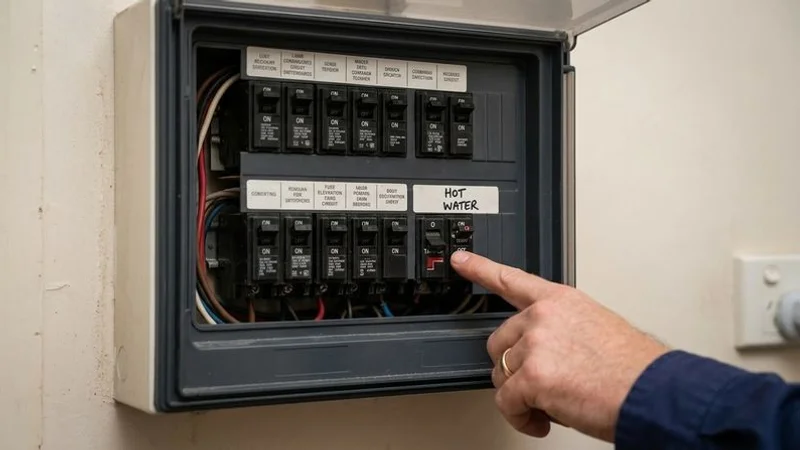
Check 1: Circuit Breaker
Tripped circuit breakers remain the leading cause of electric heating failures. Our technicians see this constantly in homes experiencing mineral scaling on heating elements. This hardened buildup eventually causes the element to short-circuit entirely. We recommend checking your main switchboard before calling a professional. A simple tripped switch accounts for nearly 40% of the residential hot water complaints we receive.
Here is exactly how to check your switchboard:
- Go to your main electrical switchboard.
- Look for the circuit breaker labelled “HWS”, “Hot Water”, or “Off-Peak”.
- Switch it firmly to “on” if it is in the “off” or middle position.
- Wait 1 to 2 hours for the water to heat up.
- Stop and call a licensed electrician or plumber if the breaker trips again immediately.
Check 2: Off-Peak Timer
Many electric hot water systems in Sydney run on a controlled load tariff. Our team finds that many homeowners misunderstand how these off-peak timers actually work. Ausgrid and Endeavour Energy control these specific times to reduce grid pressure during peak demand.
We receive numerous calls about cold water during the day from customers on these plans. Ausgrid’s Controlled Load 1 tariffs now include a daytime “solar soak” operating window between 10 am and 2 pm. Our experience shows this shift helps utilize excess rooftop solar energy. It is perfectly normal for your system not to heat outside these specific residential windows.
- You will need to wait until the next off-peak period if you exhaust the stored supply.
- Pressing a “boost” switch will provide immediate power to the element for a short period if your system has one.
- Upgrading to a smart meter allows your retailer to optimize these heating times remotely.
Check 3: Temperature Setting
Accidental thermostat adjustments cause a surprising number of cold shower complaints. Our plumbers check the thermostat settings behind the small cover plate on the tank first. The Australian Standard AS 3498 mandates very specific temperature rules for your family’s safety.
We ensure stored water is kept at a minimum of 60°C to prevent the growth of harmful Legionella bacteria. A tempering valve then cools the water to a maximum of 50°C before it reaches your bathroom taps. Our typical maintenance schedule includes replacing this specific valve every five years. You should contact a plumber to test the tempering valve if the tank is hot but the tap is lukewarm.
Check 4: Relief Valve
The temperature and pressure relief (TPR) valve is a critical safety component located on top of or beside the tank. We always warn clients about continuous discharge from this brass valve. A steady flow of water usually indicates a faulty thermostat causing the tank to overheat dangerously.
Our emergency responders recommend turning off the power immediately if you see continuous pouring water. Replacing a faulty TPR valve is a standard repair that typically costs between $150 and $300 in Sydney. We find this small expense is far better than replacing an entire damaged cylinder.
Gas Hot Water System Troubleshooting
Check 1: Pilot Light (Storage Systems)
Older gas storage units rely on a continuous pilot light to ignite the main burner. Our technicians often relight systems from popular brands like Rheem or Dux after strong winds extinguish the small flame. You can safely check this ignition status yourself.
Here is our quick relighting sequence for a standard Rheem Stellar:
- Look through the small viewing window at the bottom of the tank.
- Verify the pilot has gone out by checking for a small blue flame.
- Hold the control knob down in the pilot position for 30 seconds.
- Press the igniter repeatedly for 40 seconds until the flame holds.
We suggest calling a plumber if the pilot refuses to stay lit. A faulty thermocouple is usually the culprit in these recurring failures. Our team can replace this small sensor quickly. Newer gas models often use electronic ignition systems instead of a standing flame. We advise skipping directly to the next step if your modern system lacks a pilot light.
Check 2: Gas Supply
Confirming the local gas supply is a simple step that saves a lot of unnecessary service fees. We recommend checking your external gas meter box first to ensure the main isolation valve is actually open. Testing other gas appliances confirms if the whole house is affected by a supply drop.
Our troubleshooting process includes three fast checks. You should verify that the gas valve on the supply line to the unit is open, meaning the handle runs parallel to the pipe. We then suggest testing your internal gas cooktop or space heater. Contact your supplier like Jemena immediately if no appliances are working, as they maintain a live network outage tracker for Sydney properties.
Check 3: Error Codes (Instantaneous Systems)
Modern gas instantaneous systems display helpful error codes on a digital panel. We use these codes to diagnose faults on premium brands like Rinnai and Bosch instantly. A flashing number takes the guesswork out of the repair process.
Our technicians frequently encounter specific codes that require immediate attention. For example, a Bosch unit displaying an A7 error indicates a faulty hot water temperature sensor. We also see the C6 code frequently, which points to a broken ventilation fan.
Here are the most common fault codes to look for:
| Code | Typical Meaning | Required Action |
|---|---|---|
| E1 / 11 | Ignition or gas supply failure | Check gas valve and meter |
| E2 / 12 | Flame failure after ignition | Check for blocked flues |
| E3 / 14 | System overheating | Requires professional service |
| A7 (Bosch) | Hot water temperature sensor fault | Requires professional service |
| C6 (Bosch) | Ventilation fan malfunction | Requires professional service |
Checking your specific unit’s manual confirms these exact meanings. Searching your brand and model number online will usually provide a free PDF manual if you lost the original copy. We highly recommend keeping a digital copy on your phone for future reference.
Check 4: Water Flow
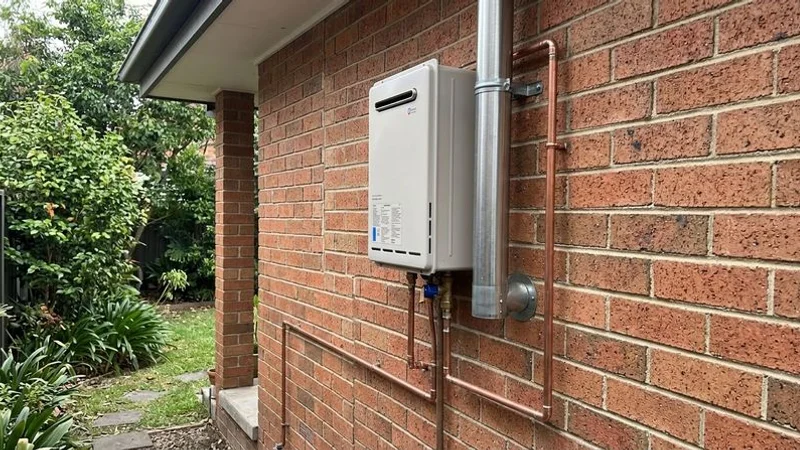
Gas instantaneous systems require a minimum water flow rate to activate the burner. Our plumbers typically see a requirement of 2 to 3 litres per minute for the internal sensor to register demand. A highly restrictive WELS-rated showerhead can sometimes drop the flow below this critical ignition threshold.
We often find the issue is simply a blocked tap aerator if only one specific sink lacks hot water. Try opening a different hot tap, like the bathtub or laundry sink, to test the flow. Our simple isolation test confirms whether the issue is localized to one fitting or affects the entire property.
Heat Pump Hot Water System Troubleshooting
Check 1: Power Supply
Heat pumps require a stable electrical connection just like traditional electric units. We always check the main switchboard and the local outdoor isolator first. A tripped local isolator often points to a temporary power surge rather than a complete unit failure.
Our installation teams ensure brands like iStore and Sanden rely on dedicated circuits complying with AS/NZS 3000 electrical standards. You should verify the main circuit breaker at your electrical switchboard is fully engaged. We also recommend checking the local AC isolator switch mounted on the wall near the outdoor unit. Both switches must be firmly in the “on” position.
Check 2: Error Codes
Your heat pump features a digital control panel that flashes specific error codes during a fault. We rely on these codes to pinpoint compressor or sensor failures immediately. Premium units like Sanden display these faults via a flashing red LED behind a small viewing window.
Our technicians frequently diagnose these common heat pump issues:
- Compressor fault: The unit cannot extract ambient heat from the air.
- Sensor fault: An internal temperature probe has failed or disconnected.
- Defrost cycle: The unit is safely clearing frost on very cold mornings.
Recording the exact error code speeds up the professional diagnosis. We assure you that the defrost cycle is completely normal and will clear itself automatically after a few minutes.
Check 3: Airflow
Outdoor heat pump units require massive amounts of clear airflow to operate efficiently. We frequently fix broken heat pumps simply by clearing away overgrown garden foliage. Removing any plants, laundry, or stored boxes blocking the vents is the absolute first step.
Our maintenance protocol checks for strict manufacturer clearance zones around the compressor. You must maintain at least a 50mm absolute minimum clearance from the back wall for brands like iStore. We ensure Sanden units have at least 600mm of completely unobstructed space at the front exhaust fan. Clean the washable air filter gently if your specific model includes one.
Check 4: Ambient Temperature
Extreme cold snaps can occasionally reduce the efficiency of your heat pump. We rarely see temperatures drop low enough in Sydney to stop a modern unit completely. Most current models operate efficiently down to minus 10°C.
Our energy audits show that a heat pump’s Coefficient of Performance naturally drops during winter. Your system might just need extra time to heat the tank on an unusually frosty morning. We assure you that a built-in backup electric heating element will automatically activate to assist the compressor if the air is too cold.
When to Call a Plumber
Knowing when to stop DIY troubleshooting prevents serious property damage. We recommend calling a professional if the basic resets fail to produce hot water. Average Australian hot water systems last between 10 to 15 years, so an ageing unit might simply be beyond repair.
Our emergency dispatch team is ready to help when things escalate. Call Mr Plumber on 1800 247 474 if:
- You have completed the steps above and the water remains cold.
- The electrical circuit breaker keeps tripping immediately after being reset.
- You detect any faint smell of gas near the unit.
- Water is actively leaking from the cylinder base.
- The system makes loud banging or popping noises.
- The tap water appears rusty or brown.
- The tank is over a decade old and requires constant resetting.
Older systems cost more to run and break down more frequently. We find that the average cost to replace a failing unit in Sydney ranges from $1,500 to $3,000 depending on the technology. It is often much more cost-effective to replace rather than repair a dying system. Our team can advise you on the most efficient options and help you compare electric, gas, and heat pump systems.
Prevent Future Hot Water Failures
Routine maintenance directly extends the lifespan of your expensive water heater. We perform annual checks that catch tiny leaks before they destroy the entire cylinder. Following a scheduled plan is essential for validating your factory warranty.
Our preventative maintenance checklist covers the most vulnerable components:
- Service gas systems every two to three years to maintain your factory warranty.
- Check the sacrificial anode every three to five years. Sydney’s soft water means a magnesium anode offers the best internal tank protection compared to standard aluminum options.
- Test the TPR valve annually by gently lifting the lever. Water should flow out and stop completely when you release it.
- Flush the tank yearly to remove heavy sediment buildup from the base.
- Inspect all visible fittings and valves for early signs of moisture or rust.
Proactive tank health management prevents sudden cold showers. We highly recommend reviewing our complete guide to extending your hot water system’s lifespan for more practical advice.
We’re Here to Help
Losing your hot water disrupts your entire day. We carry common replacement parts on our vans to ensure rapid service. Fast repairs mean your hot water is often restored in a single visit.
Our licensed technicians handle issues everywhere from Bondi to Randwick and Coogee. Bookmark this No Hot Water? A Step-by-Step Troubleshooting Guide for future reference.
We are standing by to restore your comfort today. Call Mr Plumber on 1800 247 474 if you need immediate assistance anywhere across the Eastern Suburbs.