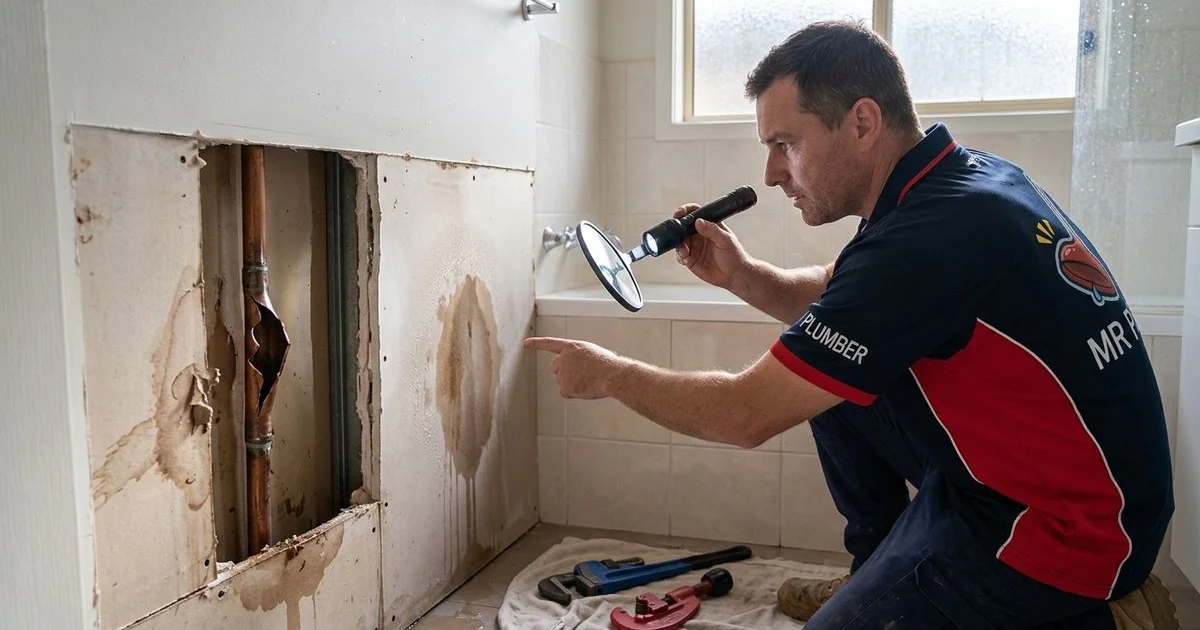
Dealing with failing drainage infrastructure is a headache no property manager wants to face.
From what I see in the field, making the right call on repair methods saves thousands of dollars in the long run.
You must decide whether to repair the existing lines or replace them entirely.
As a professional service team, we see this exact scenario daily across the region. Both pipe relining and traditional pipe replacement are offered across Sydney’s Eastern Suburbs to solve these issues. Let’s look at the 2026 data, explore the costs, and determine the best practical approach for your home.
What Is Pipe Relining?
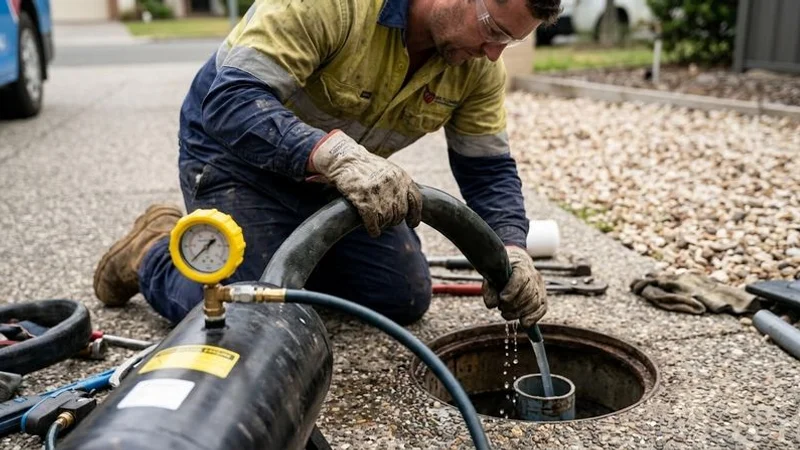
Pipe relining is a trenchless repair method that creates a new, structurally sound pipe inside your existing damaged drain. This technique uses cured-in-place pipe (CIPP) technology. Installers insert a flexible textile liner impregnated with epoxy resin directly into the old pipework.
Our preferred material for this process is Brawoliner, a premium German-engineered product that meets rigorous AS/NZS 3500 Standards for Australian plumbing. This seamless liner passes extensive 10,000-hour load tests to ensure maximum durability. It handles bends up to 90 degrees with ease.
The installation process generally involves several precise steps:
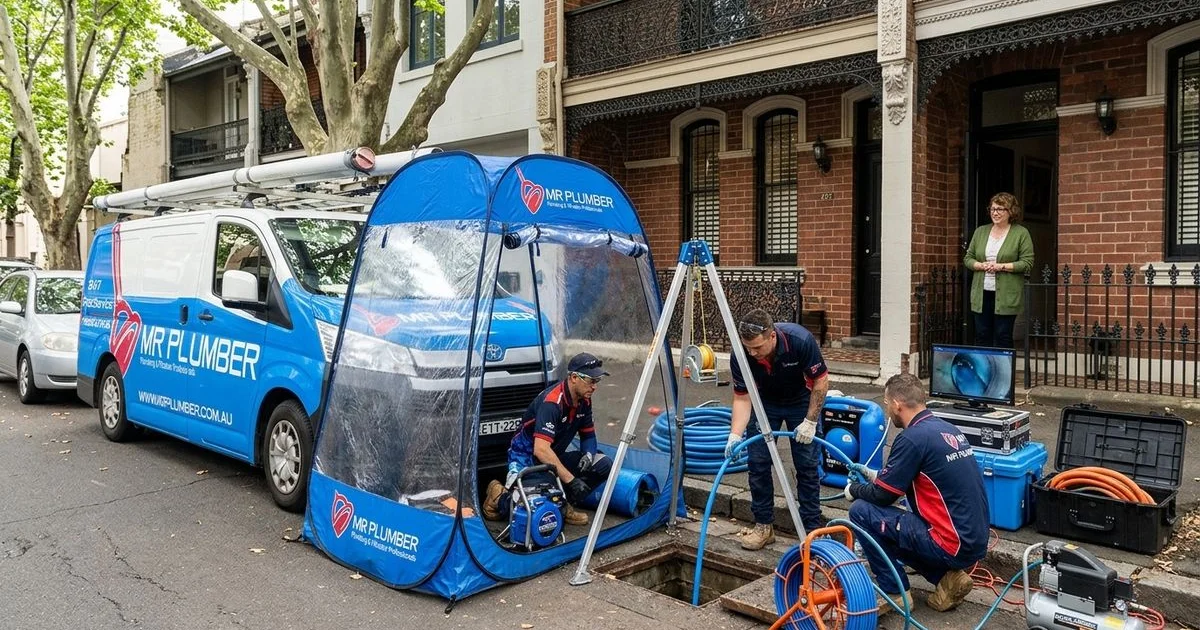
- CCTV inspection using advanced RIDGID or iPEK Rovion cameras to assess the pipe condition and map the damage.
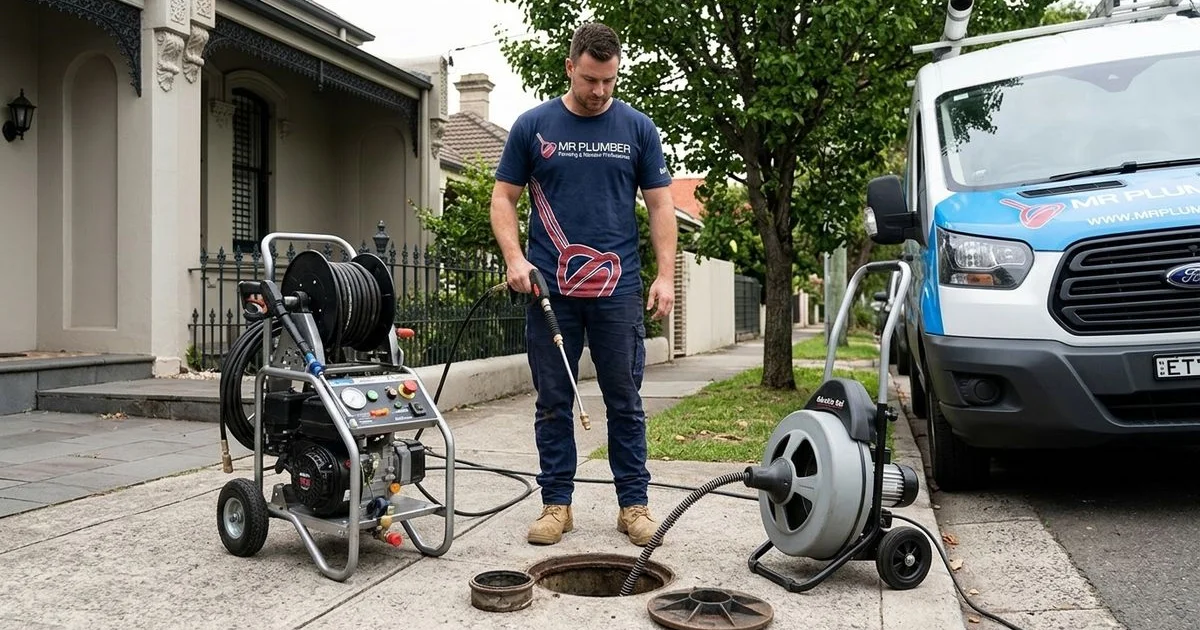
- High-pressure cleaning to remove roots, debris, and buildup.
- Inserting a resin-saturated liner into the pipe through an existing access point.
- Inflating the liner so it presses firmly against the pipe walls.
- Curing the resin using hot water, steam, or ambient temperature (which usually takes 2 to 4 hours).
- Final CCTV inspection to confirm the repair is smooth and properly sealed.
The result is a seamless, jointless barrier within the old pipe. You essentially get a brand-new pipe without the need for destructive digging.
What Is Pipe Replacement?
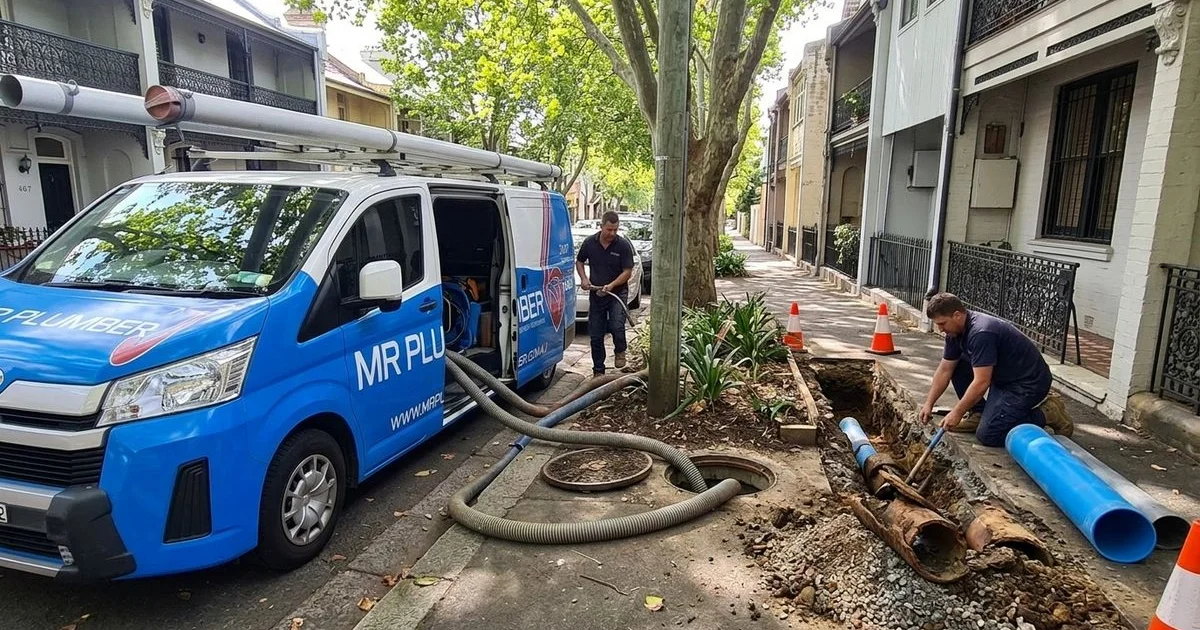
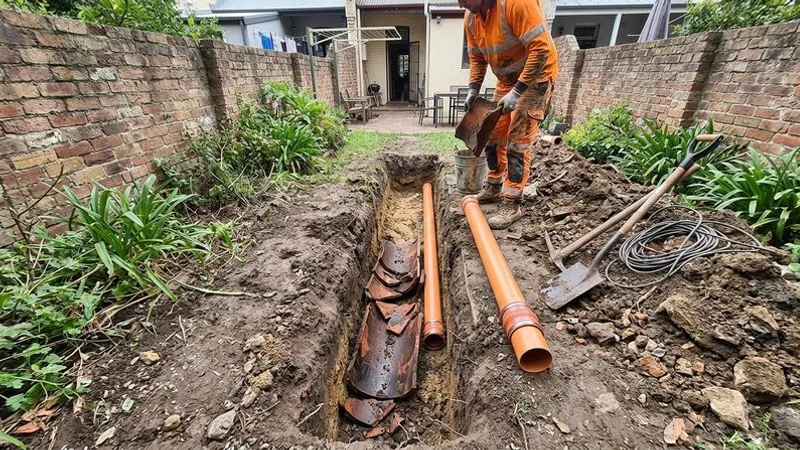
Traditional pipe replacement involves excavating the ground, removing the damaged pipe, and installing a new one. This method requires heavy machinery and significant manual labour.
Our technicians often recommend this when the original pipes have completely collapsed. The conventional replacement process includes:
- Locating the pipe using CCTV and acoustic pipe locating equipment.
- Excavating a trench along the pipe route.
- Removing the old pipe in sections.
- Installing new PVC or HDPE pipe at the correct gradient.
- Backfilling the trench and compacting the soil.
- Reinstating surfaces like concrete, pavers, turf, or garden beds.
Securing local council approvals adds another layer of difficulty to this process. Excavating near property boundaries in areas like Waverley or Woollahra often requires costly Road Opening Permits.
Waverley Council charges a $163 non-refundable application fee for a road opening permit in 2026. Nightworks plant opening fees can quickly push project costs past $4,000.
Side-by-Side Comparison
| Factor | Pipe Relining | Pipe Replacement |
|---|---|---|
| Cost | $400 to $1,200 per metre | $500 to $1,500+ per metre |
| Timeframe | 1 to 2 days typical | 3 to 7 days typical |
| Excavation | None or minimal | Full trench required |
| Surface disruption | Minimal | Significant |
| Lifespan | 50+ years (Brawoliner) | 50 to 100 years (HDPE/PVC) |
| Pipe diameter reduction | 5 to 10mm reduction | No reduction (new pipe) |
| Suitability for severe damage | Limited | Excellent |
| Heritage property friendly | Yes | Often restricted |
| Warranty | Typically 35 to 50 years | Varies by installer |
Advantages of Pipe Relining
No Excavation
This stands out as the most significant benefit. Relining requires no trenches, meaning your property remains intact.
Our trenchless approach delivers several distinct advantages:
- No damage to landscaping: Gardens, lawns, and mature trees remain untouched.
- No surface reinstatement: There is no need to re-lay concrete driveways, pathways, or expensive pavers.
- No disruption to neighbours: Heavy machinery or large truck access is rarely required.
- Faster completion: Most residential jobs finish in a single day.
For properties in the Eastern Suburbs, preserving the landscape is incredibly valuable. Many homes in Paddington, Woollahra, and Darlinghurst feature limited access and heritage restrictions. Digging up established gardens or cutting through sandstone retaining walls creates massive restoration bills.
Cost-Effective
While the per-metre cost of repairing and replacing may appear similar on paper, the total project expense for trenchless repair is almost always lower. Industry data for 2026 shows that relining jobs in Sydney typically cost $400 to $1,200 per metre and often run 20% cheaper than full excavation projects.
Our quotes factor in the hidden expenses you avoid. Trenchless technology eliminates the need for:
- Excavation labour and machinery hire.
- Skip bins for soil and old clay pipe disposal.
- Surface reinstatement for concrete, pavers, and turf.
- Temporary drainage arrangements.
- Council permits required for footpath or road excavation.
Keep in mind that installers do apply a minimum inversion price for very short sections. This covers the equipment setup time, but the overall savings still heavily favour the trenchless method.
Root-Proof
The cured-in-place liner creates a seamless, jointless pipe with no entry points for thirsty tree roots. This creates a permanent solution to the root intrusion problem that plagues so many Eastern Suburbs properties.
Sydney Water reports that tree roots cause up to 80% of sewer blockages during dry conditions. Older terracotta and clay pipes inevitably develop hairline cracks over time.
These tiny fissures leak moisture into the soil, attracting the ultra-fine feeder roots of local species like Camphor Laurels and Moreton Bay Figs.
“Epoxy liners completely seal existing cracks, starving invasive roots of the moisture they need to survive.”
The smooth, continuous barrier effectively stops these invasions. You gain peace of mind knowing the drain is fully protected.
Advantages of Pipe Replacement
Handles Severe Damage
Trenchless repair requires the existing pipe to maintain its general shape. The resin-soaked liner needs a structural wall to bond against.
Our technicians will advise a full replacement if your drainage system exhibits extreme structural failure. If the pipe has experienced any of the following, replacement becomes the only viable option:
- Completely collapsed walls that have lost their circular profile.
- Large sections missing from severe, prolonged corrosion.
- Significant misalignment at joints, causing bellying or back-falls.
- Ground subsidence causing the pipe route to dip drastically.
Restores Full Pipe Diameter
Relining reduces the internal diameter of the pipe by approximately 5 to 10mm due to the thickness of the liner. In most cases, this slight reduction has absolutely no impact on water flow. The ultra-smooth epoxy surface actually improves flow rates compared to a rough, scaled, or root-filled pipe.
Sometimes, older properties feature pipes that are fundamentally undersized for modern usage. A complete dig-up allows you to upsize a standard 100mm sewer line to a 150mm diameter pipe to handle increased water capacity.
Allows Route Changes
If the original drain was poorly routed, a fresh installation fixes the core architectural flaw. Common issues include too many sharp bends, incorrect gradients, or running directly under aggressive tree roots.
Our excavation crews use this opportunity to lay the new PVC pipe on a superior route. Establishing an optimal fall ensures better long-term performance and reduces the likelihood of future clogs.
Full Material Renewal
New PVC or High-Density Polyethylene (HDPE) pipes boast a theoretical lifespan of 50 to 100 years according to Australian plastics industry standards. These modern plastics resist ground movement and chemical corrosion exceptionally well.
While cured-in-place pipes also offer excellent longevity with 50-year warranties, a complete dig-up means absolutely no old terracotta or cast iron remains in the ground. You start completely fresh with factory-grade materials.
When to Choose Pipe Relining
This method proves to be the superior choice in specific scenarios. You should opt for trenchless rehabilitation when:
- The pipe is cracked, suffers from root intrusion, or has minor joint displacement, but maintains its general shape.
- The drain runs under permanent structures, concrete driveways, or mature gardens where excavation would be destructive or prohibitively expensive.
- The property has heritage restrictions, which is incredibly common in Woollahra, Paddington, and Darlinghurst.
- Access is strictly limited by narrow terraces, multi-level property layouts, or tight strata building confines.
- You want the job completed quickly and with minimal surface disruption.
- You need a long-term solution to recurring blocked drains.
“Trenchless technology is the definitive choice for Sydney homeowners looking to protect their expensive landscaping and avoid council road opening fees.”
When to Choose Pipe Replacement
Excavation and complete renewal becomes the better choice when your system faces catastrophic failure. You should choose this route when:
- The pipe has completely collapsed or lost its structural integrity.
- There is significant ground subsidence or shifting along the drain route.
- The system needs to be upsized to handle increased capacity for a growing household.
- The route needs to be changed to avoid massive tree roots or improve a poor gradient.
- The area above the pipe is easily accessible with no permanent structures, expensive landscaping, or heritage constraints blocking the way.
- Multiple underground services are being upgraded simultaneously, such as during a major home renovation.
Can You Combine Both Methods?
Absolutely. In many Eastern Suburbs properties, a hybrid approach delivers the highest value. This strategy balances cost savings with necessary structural repairs.
Our plumbing specialists frequently recommend combining both techniques to optimise your budget. A typical combined project might look like this:
- Reline the sections that run under expensive structures, driveways, or delicate garden areas.
- Replace the sections that are completely collapsed or require a completely new gradient.
- Connect the repaired and replaced sections at easily accessible junction points.
This hybrid approach minimises property disruption while ensuring the entire drainage network meets current Australian compliance standards.
Pipe Relining vs Pipe Replacement, Which Should You Choose?
At Mr Plumber, every successful project starts with a comprehensive CCTV drain inspection using advanced RIDGID camera systems. The high-definition footage tells the exact condition of your system. This visual data helps determine which method will deliver the best long-term result at the most reasonable price point.
Our technicians never push one single solution over another. The primary goal is to fix your drainage permanently. You should not have to call a professional back every six months for the exact same blocked drain.
Get Expert Advice
When weighing Pipe Relining vs Pipe Replacement, Which Should You Choose, having professional guidance makes all the difference.
If you are dealing with damaged or deteriorating drains in Sydney’s Eastern Suburbs, call Mr Plumber on 1800 247 474.
Our friendly team will inspect your property, show you the live CCTV footage, and provide clear options. Transparent, upfront pricing is provided for both pipe relining and traditional pipe replacement.
Reach out today to secure a permanent fix for your plumbing network.