We have noticed that dealing with damaged drains across Sydney’s Eastern Suburbs often causes unnecessary stress for local property managers and homeowners. The dividing line between a temporary patch and a lasting pipe relining solution usually comes down to clear pricing data. You need transparent facts to make a smart financial decision.
Our professional service team compiled this 2026 cost guide based on recent projects from Bondi to Randwick. This data shows exactly what drives these prices. Let’s look at the actual numbers and explore practical ways to respond to a failing drain.
How Much Does Trenchless Pipe Relining Cost in Sydney: 2026 Averages
You will find that most residential projects fall within a predictable pricing bracket once a professional inspects the site. This upfront transparency helps busy families and strata managers budget accurately for drain repairs.
Our standard pricing reflects both the repair length and the specific pipe condition. A typical Sydney home will see base setup fees of around $2,500 for standard 100mm pipes. The per-metre rate is then added on top of that base fee.
The tables below outline the current 2026 market rates for materials and labour.
Per-Metre Pricing
Industry data shows that trenchless repairs generally range from $400 to $1,200 per linear metre. The exact figure depends heavily on the diameter of the pipe being repaired.
We always begin with a high-resolution Ridgid CCTV camera inspection as part of our leak detection process to determine the exact pipe size and condition. This step ensures your quote is perfectly accurate.
| Pipe Diameter | Cost Per Metre |
|---|---|
| 65mm to 100mm (internal drains) | $400 to $600/m |
| 100mm to 150mm (sewer/stormwater) | $500 to $800/m |
| 150mm to 225mm (larger mains) | $700 to $1,200/m |
| 225mm+ (commercial) | $1,000 to $2,000+/m |
Common Residential Jobs
Many residential repairs share similar characteristics. A standard bathroom branch line repair requires a different approach than a full house sewer restoration.
Our technicians regularly handle these common scenarios across the Eastern Suburbs.
| Job Type | Typical Length | Estimated Cost |
|---|---|---|
| Kitchen to boundary (sewer) | 8 to 15m | $4,000 to $10,000 |
| Bathroom branch line | 3 to 6m | $1,800 to $4,000 |
| Full house sewer line | 15 to 25m | $8,000 to $18,000 |
| Stormwater pipe section | 5 to 10m | $3,000 to $7,000 |
| Junction repair (patch) | Single point | $800 to $1,800 |
Additional Costs
Preparation is a vital part of the relining process. A clean pipe is strictly required for the new epoxy resin to bond correctly.
We use high-pressure water jetting to clear out debris before any lining begins. You should factor these preparation steps into your final budget.
| Service | Cost |
|---|---|
| CCTV pre-inspection | $250 to $500 |
| High-pressure cleaning (pre-reline) | $300 to $600 |
| CCTV post-inspection | Often included |
| Access point creation | $200 to $500 |
| Junction cutting (robotic) | $400 to $800 per junction |
What Affects the Price of Pipe Relining?
1. Length of Pipe and Minimum Setup Fees
The total length of the damaged section acts as the primary cost driver for any trenchless repair. Longer runs require more structural resin and liner fabric.
Our pricing structure often shows a decrease in the per-metre cost for longer pipes. This happens because the initial equipment setup is spread across a larger area.
Shorter repairs under two metres still incur a minimum inversion setup charge of around $2,500. This base fee covers the highly specialised machinery and labour required to prepare the site.
2. Pipe Diameter and Material Thickness
Larger pipes demand thicker liners and heavier installation equipment to complete the job correctly. The AS/NZS 3500 plumbing standards dictate specific material requirements for different flow capacities.
We know that a standard 100mm household sewer line requires significantly fewer materials than a 225mm commercial stormwater main. You can expect the final cost to scale directly with the diameter of the drain.
3. Bends, Junctions, and Sydney Water Boundaries
Straight runs of plumbing present the simplest and most cost-effective scenarios for trenchless methods. Every single bend or change in direction adds technical difficulty to the installation process.
Our team uses advanced robotic cutters to reopen branch connections after the epoxy resin cures. This precision robotic cutting typically adds $400 to $800 per junction.
Property owners must also consider the Sydney Water responsibility boundaries. You own and must maintain the private wastewater pipes right up to the exact point of connection with the main sewer system. This connection point often sits outside your property line under a public footpath.
4. Pipe Condition and Blockage Severity
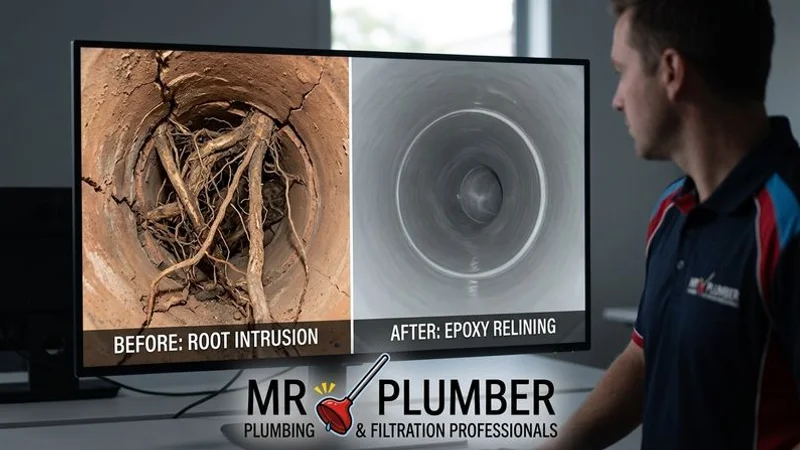
Older Eastern Suburbs locations like Paddington and Woollahra contain thousands of original terracotta pipes. These rigid clay lines are highly susceptible to severe tree root intrusion.
We frequently see heavy root masses fracture these old pipes, requiring extensive mechanical preparation before any new lining can be inserted. High-pressure water jetting will increase the initial labour costs for heavily blocked lines.
Our technicians cannot reline pipes that have completely collapsed or lost their structural shape. Severe structural failure means pipe replacement becomes the only viable solution for that specific section of plumbing.
5. Site Access and Heritage Restrictions
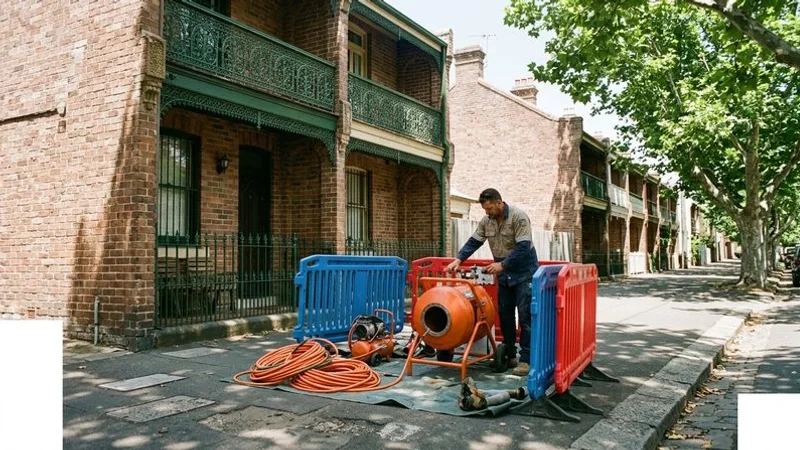
The flexible liner must enter the drainage system through an existing inspection opening or a newly created access point. Creating a new entry point adds extra labour and material expenses to the final invoice.
Access poses unique challenges in older suburbs with narrow rear lanes and shared boundary walls. Traditional excavation in these areas often requires expensive council permits.
Waverley Council currently charges a $163 Road Opening Permit application fee, plus a $201.50 site inspection fee. Avoiding these council fees and the associated red tape makes trenchless repairs highly appealing.
6. Liner Brands, Warranties, and Insurance Requirements
Premium materials guarantee a permanent fix and provide essential peace of mind for property owners. You will typically see three main categories of liner systems used across Australian plumbing projects.
| Liner Type | Typical Warranty | Characteristics & Brands |
|---|---|---|
| Fibreglass (CIPP) | 35 to 50 years | Most common, excellent durability. Top brand: Brawoliner (German) |
| Silicate resin | 25 to 35 years | Good for smaller pipes and custom junctions. Top brand: Nuflow (Australian) |
| Patch liner | 10 to 25 years | For localised damage only |
We strictly install premium systems like Brawoliner, which are fully WaterMark-approved and backed by comprehensive manufacturer warranties.
The NSW Home Building Compensation Fund applies to any residential plumbing job exceeding $20,000. This mandatory insurance, administered by icare NSW, protects the homeowner and is factored into quotes for very large strata projects.
Is Pipe Relining Worth the Cost?
Comparing Total Project Costs
Headline per-metre rates can look misleading when you compare trenchless methods directly against traditional excavation. The true financial benefit becomes obvious when you factor in the hidden expenses of digging up a property.
Our team has outlined a typical full project comparison for a 12-metre sewer line repair in a standard Eastern Suburbs home.
| Cost Item | Pipe Relining | Pipe Replacement |
|---|---|---|
| CCTV inspection | $350 | $350 |
| High-pressure cleaning | $400 | N/A |
| Pipe work (12m) | $6,000 | $7,200 |
| Excavation | N/A | $3,500 |
| Surface reinstatement | N/A | $2,500 |
| Garden restoration | N/A | $1,500 |
| Skip bins/disposal | N/A | $800 |
| Council permits | N/A | $500 |
| Total | $6,750 | $16,350 |
This example highlights how trenchless methods cost less than half the total price of a dig-and-replace job. Industry data suggests trenchless relining consistently saves property owners 30 to 50 percent compared to full excavation.
When Relining Saves the Most Money
Certain property features make trenchless repairs the clear financial winner.
Our clients see the highest return on investment in these specific scenarios:
- The damaged drain sits under a concrete driveway. Replacing the slab would add $3,000 or more to the final bill.
- The plumbing runs beneath established landscaping or shifting sandy Botany soils in suburbs like Bellevue Hill and Vaucluse.
- The building falls under local heritage overlays, making council excavation permits expensive and slow to obtain.
- The pipe services a multi-level strata building, meaning common area disruption must stay at an absolute minimum.
- The repair schedule is tight, as trenchless fixes usually take 1 to 2 days instead of a full week.
When Traditional Replacement Makes Sense
A few specific situations make traditional digging the smarter financial choice.
You should consider full excavation under the following conditions:
- The pipe sits in a shallow, open lawn with no structures built above it.
- The damage is isolated to a very short 1-metre section where the setup costs for inversion equipment are not justified.
- The structural integrity is completely gone, leaving no shape for the new resin to adhere to.
- The property is already undergoing a major renovation with active earthworks taking place.
How to Get an Accurate Quote
Every single drainage system presents a unique layout and specific challenges. You need a detailed site assessment to receive a binding, accurate price.
Our quoting process involves three clear steps to ensure complete transparency:
- Book a CCTV drain inspection: A Ridgid high-resolution camera reveals the exact condition, length, and depth of the underground lines.
- Review the footage with your technician: This allows you to see the tree root intrusions or cracks directly on the screen.
- Receive an itemised written quote: The final document breaks down the resin materials, preparation time, robotic junction cutting, and warranty details.
The Mr Plumber team provides these detailed breakdowns so property managers and homeowners know exactly where every dollar goes. This data-driven approach allows you to make an informed, confident decision.
Book a Pipe Inspection
Resolving a compromised drain quickly will protect your property from serious water damage and structural issues. Knowing exactly how much does trenchless pipe relining cost in Sydney helps you plan the right response for your budget.
Our local technicians are ready to evaluate your underground systems and provide a lasting solution.
If you suspect your property has recurring blocked drains, invasive tree roots, or failing clay pipes, call Mr Plumber on 1800 247 474. We will conduct a thorough CCTV inspection and deliver a clear, upfront quote for pipe relining or any other required plumbing service.