
Advanced Leak Detection — Find Hidden Leaks Fast
Advanced non-invasive leak detection in Sydney's Eastern Suburbs using thermal imaging, acoustic sensors and tracer gas.
Overview
Hidden leaks waste water, inflate bills and cause structural damage you cannot see. Mr Plumber's leak detection specialists use thermal imaging cameras, acoustic listening devices and tracer gas to pinpoint leaks behind walls, under slabs and in concealed pipework — without destructive investigation.
The Hidden Cost of Undetected Leaks
A pinhole leak in a copper pipe behind your bathroom wall can release 20 litres of water per day. That may not sound like much, but over weeks and months it saturates wall cavities, rots timber framing, promotes toxic mould growth and can undermine the structural integrity of your home. By the time you notice the discoloured paint or musty smell, the damage is already extensive — and expensive to remediate.
In Sydney’s Eastern Suburbs, where many homes are terraces, semi-detached houses and apartments with shared walls, a leak in one unit can quickly affect neighbouring properties. Early detection is not just about saving water — it is about protecting your most valuable asset.
Mr Plumber’s leak detection service uses advanced, non-invasive technology to find hidden leaks quickly and accurately, so repairs can be targeted and damage minimised. If you are wondering whether to investigate yourself first, our guide on DIY leak detection vs hiring a professional plumber explains when it makes sense to call in specialist equipment.
Our Leak Detection Technology
Thermal Imaging Cameras
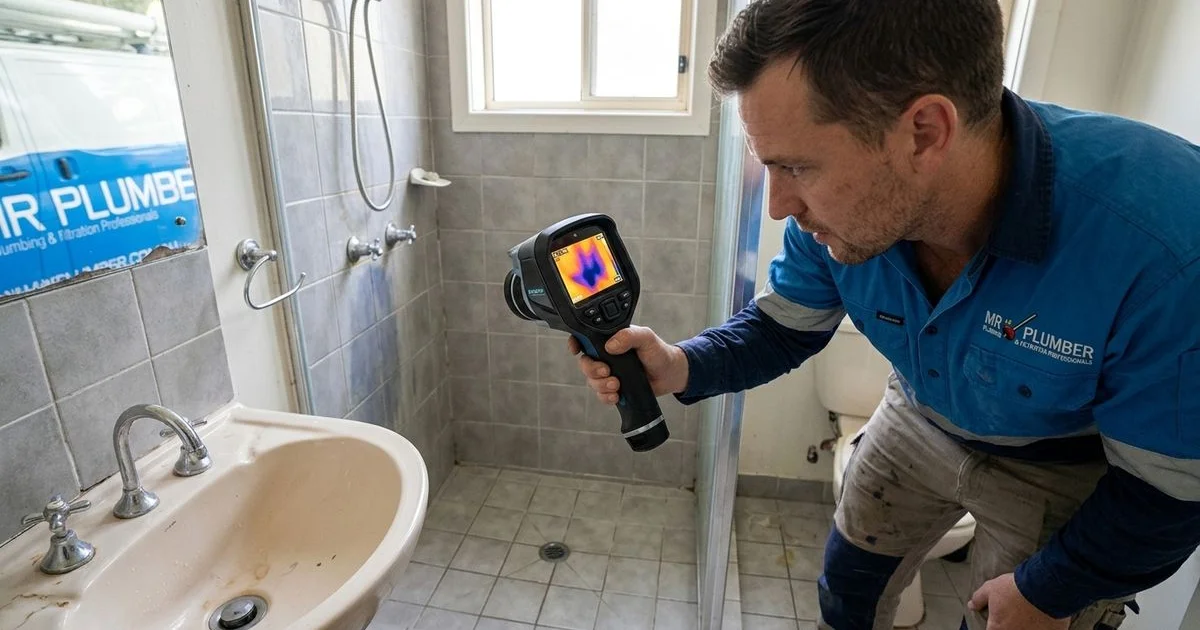
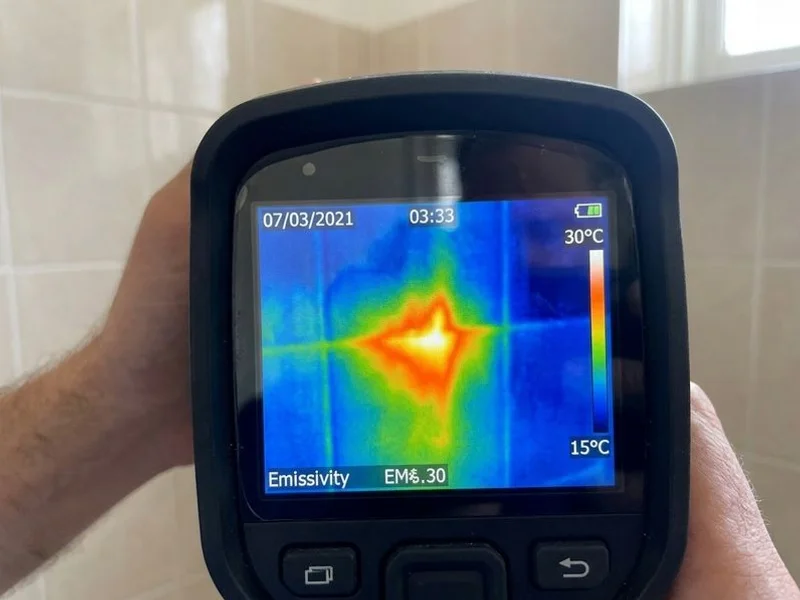
Infrared thermal cameras detect temperature variations on surfaces. A leak behind a wall or under a floor creates a cool zone as water evaporates, which shows up clearly on the thermal image. This technology is particularly effective for detecting leaks in hot water lines, underfloor heating systems and in-wall pipework.
Our FLIR thermal cameras produce detailed images that we include in your leak detection report — useful evidence for insurance claims.
Acoustic Listening Equipment
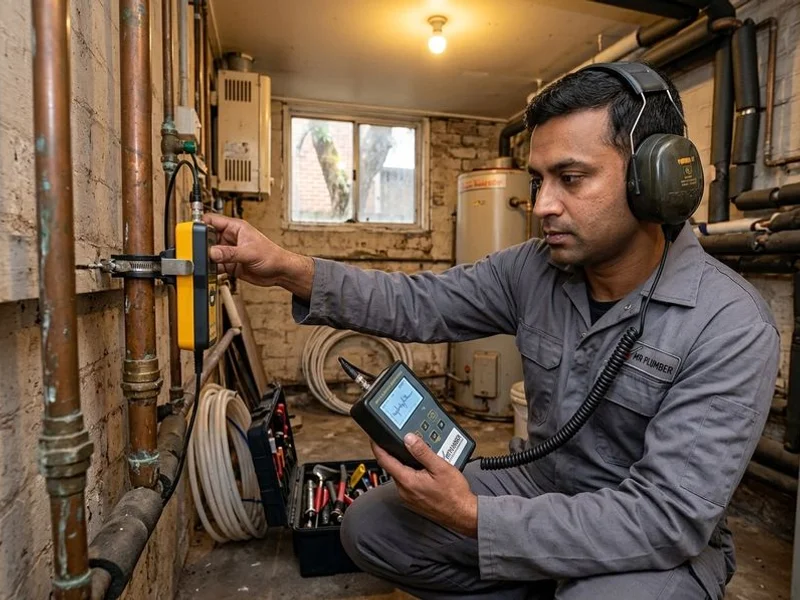
When water escapes a pressurised pipe through a crack or pinhole, it creates a distinctive sound. Our acoustic listening equipment amplifies this sound and allows our technician to trace the leak along the pipe path. Ground microphones and contact sensors can detect leaks through concrete, timber and tiled surfaces.
Acoustic detection is our primary tool for slab leaks — pipes running under concrete floor slabs in apartments and ground-floor units across Bondi, Randwick and Maroubra.
Tracer Gas Detection
For pipes that are not under pressure or where acoustic methods are inconclusive, we use tracer gas. A safe, inert gas (usually a hydrogen-nitrogen mix) is introduced into the pipe. Because the gas is lighter than air, it rises through even the tiniest cracks in concrete, tiles and walls. A sensitive gas detector on the surface above pinpoints exactly where the gas — and therefore the leak — is escaping.
Tracer gas is particularly effective for detecting leaks in sub-slab stormwater and sewer lines where water pressure cannot be applied.
Moisture Mapping
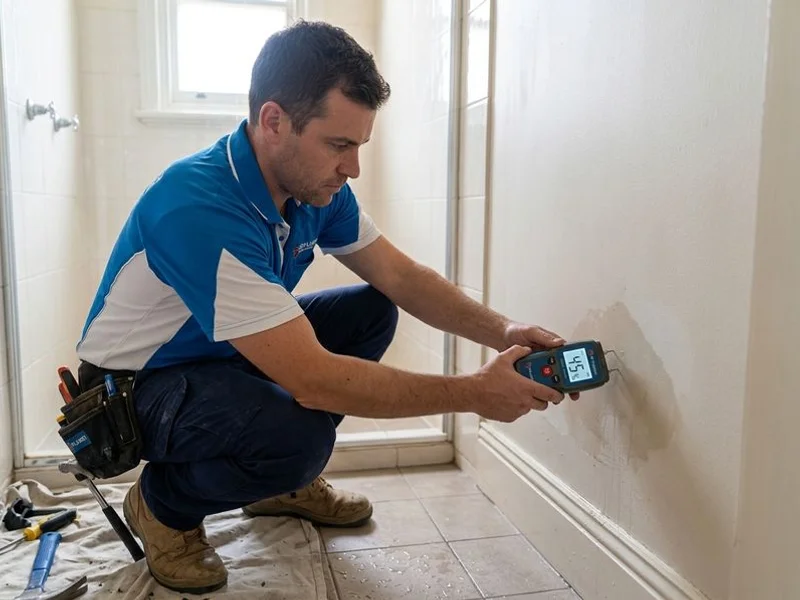
We use professional-grade moisture meters — both pin-type and non-invasive capacitance meters — to map the extent of water damage in walls, floors and ceilings. Moisture mapping shows exactly how far water has travelled from the leak source, which is critical information for scoping remediation work and insurance claims.
Common Leak Sources in Eastern Suburbs Homes
In-Wall Copper Pipes
Older homes in Paddington, Woollahra and Surry Hills often have original copper water pipes running through wall cavities. Over decades, these pipes develop pinhole leaks from corrosion, particularly where different metals meet (galvanic corrosion). The first sign is usually a damp patch on the wall or ceiling below.
Slab Leaks
Apartment blocks and ground-floor units across the Eastern Suburbs frequently have water and waste pipes cast into or running beneath the concrete slab. When these pipes fail — from movement, corrosion or poor original installation — the leak can go undetected for months because the water drains away beneath the slab.
Signs of a slab leak include warm spots on the floor (hot water leak), higher-than-expected water bills, or the sound of running water when all fixtures are turned off.
Shower Recess Failures
Failed waterproof membranes in shower recesses are one of the most common leak sources in Eastern Suburbs apartments. Water penetrates through cracked grout or failed silicone, passes through the membrane and saturates the wall cavity or floor structure below. We use moisture meters to map the extent of the failure and determine whether a localised repair or full shower rebuild is required.
Leaking Roof and Flashing
While strictly a roofing issue, roof leaks often present as ceiling water stains that mimic plumbing leaks. Our thermal imaging can quickly determine whether the water source is a plumbing pipe or a roof penetration, saving you the cost of an unnecessary plumbing investigation.
Underground Water Mains
The water main running from the street to your meter and from the meter to your house is often the most neglected pipe on the property. Poly pipe deterioration, root damage and fitting failures can cause significant water loss underground. If your water bill has spiked and no internal leak is found, the underground main is the next place to check.
The Leak Detection Process
When you call Mr Plumber for leak detection, here is what to expect:
1. Initial consultation. We discuss the symptoms — when did you first notice the problem, which areas are affected, has your water bill increased? This helps us focus our investigation.
2. Meter test. We check your water meter with all fixtures turned off. If the meter is still ticking over, there is definitely a leak somewhere in your system.
3. Systematic sweep. Using a combination of thermal imaging, acoustic listening and moisture metering, we systematically scan the suspected area. We work methodically to eliminate possibilities and narrow down the source.
4. Pinpoint confirmation. Once we have a likely location, we may use tracer gas or dye testing to confirm before making any access openings.
5. Report and repair. We provide you with a written report including thermal images, moisture readings and the confirmed leak location. In most cases, we repair the leak during the same visit.
Insurance-Ready Reporting
Water damage claims are one of the most common household insurance claims in Australia. A thorough leak detection report strengthens your claim by providing objective evidence of the leak location, cause and extent of damage. Our reports include timestamped thermal images, moisture maps and a professional assessment of the cause — exactly what insurers need to process your claim efficiently.
Servicing the Entire Eastern Suburbs
Mr Plumber provides leak detection services across Bondi, Bronte, Coogee, Randwick, Kensington, Paddington, Woollahra, Double Bay, Rose Bay, Bellevue Hill, Surry Hills, Darlinghurst, Potts Point, Maroubra, Kingsford and all surrounding suburbs.
Call 1800 247 474 to book a leak detection inspection.
Our Work
Why Choose Mr Plumber for Leak Detection
Non-Invasive Technology
We locate leaks without ripping open walls or floors. Our equipment pinpoints the source so repairs require minimal disruption.
Multi-Technology Approach
No single tool finds every leak. We combine thermal, acoustic, moisture and gas detection for reliable results every time.
Insurance Report Ready
We provide a detailed report with thermal images and moisture readings that insurance companies accept for water damage claims.
Fix It the Same Day
Once located, most leaks are repaired during the same visit. No need to book a second appointment.
Our Process
Symptom Analysis
We review your water bills, check the meter for continuous flow and inspect visible signs of moisture, mould or staining.
Technology Sweep
Using thermal cameras, acoustic sensors and moisture meters, we systematically scan walls, floors and ceilings to locate the leak.
Pinpoint Confirmation
Where needed, we use tracer gas or dye testing to confirm the exact source before opening any wall or floor.
Targeted Repair
With the leak precisely located, we make the smallest possible access opening, complete the repair and reinstate the surface.
Frequently Asked Questions
How do I know if I have a hidden leak?
Will you need to cut into my walls?
Can you detect leaks under a concrete slab?
Do you provide reports for insurance claims?
Ready to Solve Your Leak Detection Problem?
Call now for a fixed price quote. No call-out fees, no hidden charges.
Call 1800 247 474